Last updated November 18, 2026
ADU Permits, Codes & Inspections in NV: What You Need to Know
Nevada SB 478 expanded ADU rights statewide, but Clark County still controls the site-specific review – and homeowners who walk into the permit office citing state law without the county’s supplemental checklist get sent home the same day. We’ve watched that exact scene play out more than once. The state says you can build; the county says show me your setback survey, your drainage plan, and your parking calculation. Both are right, and both apply to your parcel. This guide decodes the actual permit pathway for a Clark County ADU in plain English – what governs your lot, what the fees really run, how long approval takes, and why so many Spring Valley projects stall for months between application and final inspection.
Quick Answer
An ADU in Clark County requires a building permit reviewed against both Nevada state law (SB 478, which limits how cities can restrict ADUs) and the county’s own development code, which sets setbacks, height, parking, and design standards for your specific parcel. Plan check typically runs 4 to 8 weeks, fees commonly fall between $2,800 and $7,500 depending on size and whether you need utility upgrades, and “by-right” approval under SB 478 covers most standard ADUs but not every project type.
Table of Contents
- State Law vs. Clark County Code: Which One Governs Your Lot?
- What “By-Right” Approval Actually Means Under SB 478
- Clark County ADU Permit Fees: Real Numbers
- The Approval Timeline, Step by Step
- The Three Most Common Plan-Check Rejections
- Owner-Builder Permits in Nevada: What It Really Costs
- Common Mistakes to Avoid
- When to Call a Professional
State Law vs. Clark County Code: Which One Governs Your Lot?
Nevada SB 478 was written to stop cities and counties from using zoning as a backdoor ban on ADUs. It requires local governments to allow accessory dwelling units in single-family zones, caps some of the fees they can charge, and prohibits certain restrictions that made ADUs impractical. That’s the state layer.
The county layer is where your project actually lives. Clark County’s development code sets the dimensional standards – rear and side setbacks, lot coverage, maximum height, minimum separation from the primary house – and those standards are applied parcel by parcel. A corner lot in Spring Valley with an existing detached garage gets reviewed differently than an interior lot with a wide backyard and no alley access.
Here’s the part that trips people up: state law preempts county rules that conflict with SB 478, but it doesn’t erase the county’s authority to review your specific site. The county can still require a survey, drainage analysis, parking calculation, and design review. What it can’t do is impose a rule that SB 478 explicitly forbids, like a blanket owner-occupancy requirement or an outright prohibition in a residential zone.
In practice, the governing question is: does the county requirement conflict with SB 478, or does it simply add a site-specific step? Most of what you’ll deal with – setbacks, drainage, utility connections – falls in the second bucket. That’s why projects in older Spring Valley neighborhoods, where lots were platted decades ago with irregular dimensions, can take longer than new construction on a clean infill parcel.
What “By-Right” Approval Actually Means Under SB 478
By-right means the county must approve your ADU if it meets the written standards – no public hearing, no discretionary vote, no neighbor petition that can sink it. That’s a real shift. Before SB 478, a single-family ADU in unincorporated Clark County could get routed to a design review or a variance process that added months.
But by-right is not automatic for every project type. These are the situations where we’ve seen Spring Valley projects still get pulled into a discretionary process despite the new law:
- Non-conforming lots. If your existing house already sits inside a setback or your lot predates current zoning, the county may require a variance or a special review to place the ADU where it needs to go.
- Flood zone parcels. Portions of the valley have mapped drainage or flood hazard areas, and an ADU in or near one triggers additional review regardless of SB 478.
- Historic or overlay districts. Design review boards can still evaluate exterior appearance in designated areas.
- Large or multi-unit ADU proposals. A detached two-story ADU on a tight lot often needs a closer look than a single-story garage conversion.
- Access and fire-review issues. If the ADU’s only access is a narrow alley or the driveway geometry blocks emergency vehicle turning, the fire marshal can require changes before approval.
The takeaway: by-right protects you from a political or neighbor-driven denial. It doesn’t protect you from a site that doesn’t meet the standards. Walk in with the county’s supplemental checklist completed, not just a printout of the statute.
Clark County ADU Permit Fees: Real Numbers
Nobody likes calling just to get a ballpark, so here are the ranges we see on Clark County ADU permits. These are estimates based on typical project scopes – your exact total depends on square footage, valuation, and which trades need separate permits.
| Fee or Cost Item | Typical Range |
|---|---|
| Building permit (based on project valuation) | $1,200 – $3,800 |
| Plan check / review fee | $400 – $1,200 |
| Electrical, plumbing, mechanical permits (combined) | $350 – $900 |
| Water and sewer connection fees | $1,500 – $4,500 |
| Clark County school impact fee (size-dependent) | Varies by unit size; often $1,000 – $4,000 |
| Survey and site plan (licensed surveyor) | $600 – $1,800 |
| Engineering / drainage letter, when required | $400 – $1,500 |
| Re-inspection fees (per visit, if you miss a check) | $80 – $150 |
Total permit and soft costs for a standard 600 to 900 square-foot attached ADU in Spring Valley usually land between $4,500 and $12,000 before you’ve spent a dollar on construction. Detached units with new utility runs trend toward the high end. Solar-ready or all-electric designs can occasionally reduce one line item and add another, so ask for the fee breakdown in writing before you submit.
One more number worth knowing: SB 478 limits how much local governments can charge for certain ADU-related impact and review fees, which is why two similar-sized projects in the same zip code can come back with different totals if one was submitted before the current fee schedule and one after. Ask the counter staff which schedule applies to your submittal date.
The Approval Timeline, Step by Step
Realistic approval timelines for a Clark County ADU run 10 to 20 weeks from pre-application to permit issuance if your drawings are clean, and 6 to 9 months if you hit a corrections cycle or a variance. Here’s the sequence we walk homeowners through.
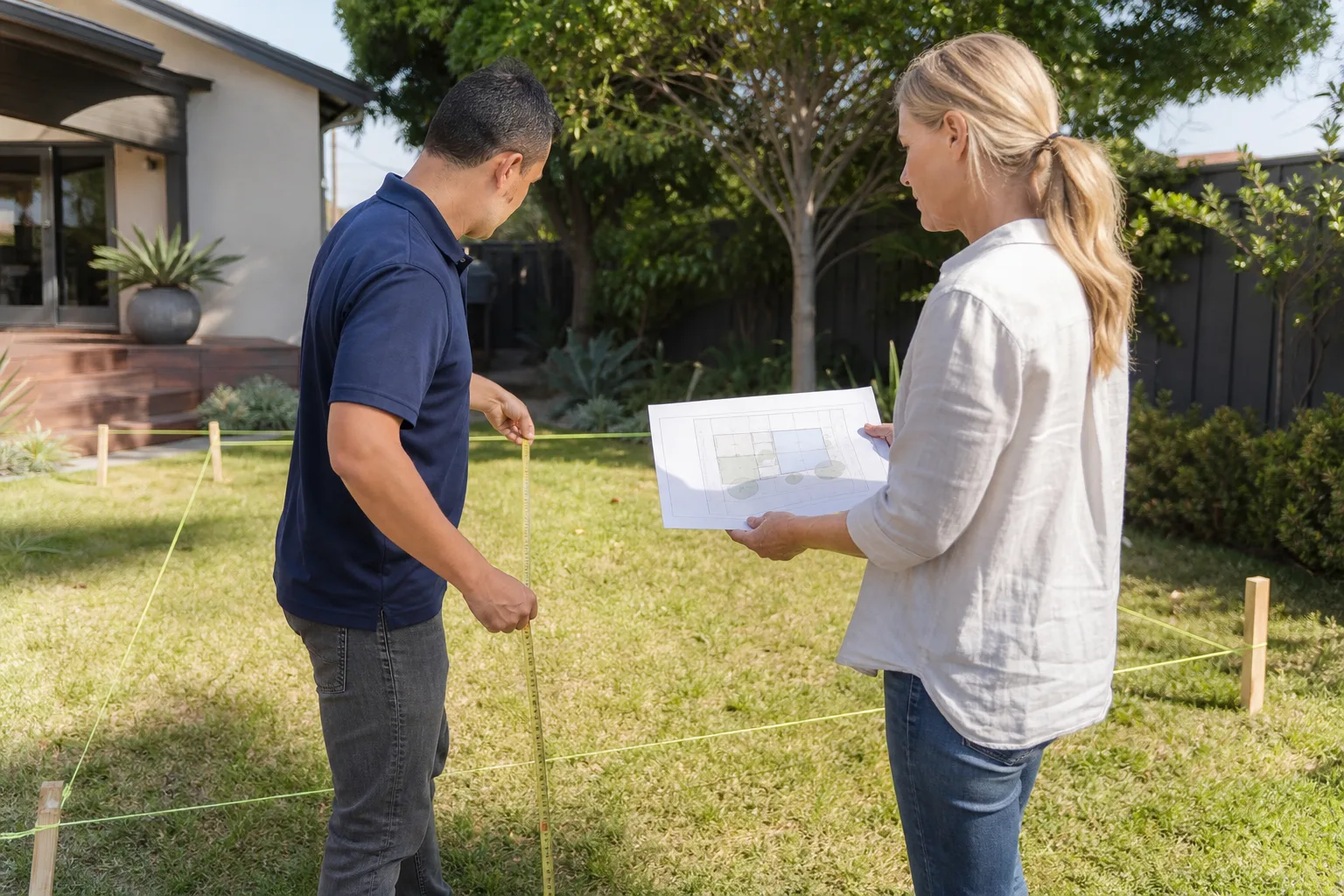
- Pre-application meeting (1 to 3 weeks to schedule). You sit down with county planning staff and review your lot’s zoning, setbacks, and any overlays. Bring a preliminary site plan. This meeting alone saves most homeowners a month of back-and-forth.
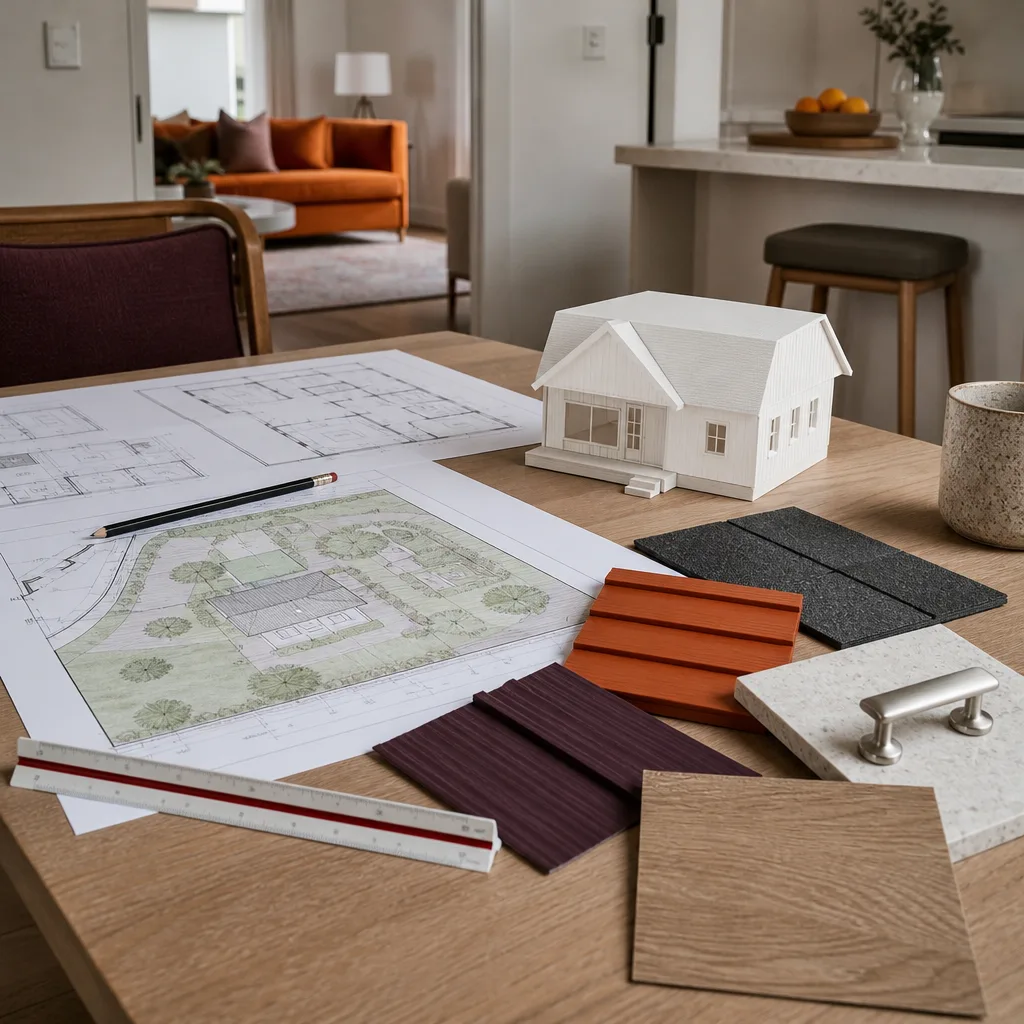
- Drawings and engineering (3 to 6 weeks). Architectural plans, structural calcs for our wind and seismic conditions, an energy compliance report, and a site survey. This is where a good drawing package earns its keep.
- Submittal and intake (1 to 2 weeks). The county accepts the package and routes it to plan review. Incomplete submittals get rejected at the counter before they ever reach a reviewer.
- Plan check (4 to 8 weeks). Reviewers check building, zoning, fire, and utility connection requirements in parallel. Expect comments.
- Corrections cycle (2 to 6 weeks per round). Most first submittals get comments. A responsive designer turns corrections around in days; a slow one turns them around in months. One cycle is normal. Two means something was missing up front.
- Permit issuance (1 week). Fees are paid, the permit is issued, and inspection milestones are set.
- Inspections during construction. Foundation, framing, rough-in electrical and plumbing, insulation, and final. Each phase must pass before the next begins.
- Final inspection and certificate of occupancy. Budget 1 to 2 weeks for scheduling and any punch-list corrections. An ADU is not legally habitable until this is signed off.
The single biggest timeline variable in Spring Valley isn’t the county – it’s the drawing package. Clean plans clear plan check in one cycle. Sloppy ones get rejected and restart the clock.
The Three Most Common Plan-Check Rejections
In our experience submitting ADU packages in Clark County, three issues cause most of the first-round rejections. Each one is avoidable with the right drawing up front.
1. Missing or inaccurate site survey. Reviewers need to see existing improvements, property lines, easements, and setbacks drawn accurately. A hand-sketched site plan gets rejected. Pay for a licensed surveyor – $600 to $1,800 is cheap compared to a three-week corrections cycle.
2. Drainage and grading not addressed. Our desert climate delivers intense, short-duration rain events. The county wants to see how the ADU’s footprint changes stormwater flow across the lot. A brief grading plan or drainage letter usually satisfies this, but it has to be there on the first submittal.
3. Energy compliance and structural details missing. Nevada’s energy code applies to ADUs, and our summer heat load and winter wind exposure both matter. A prefab unit from a manufacturer like Dvele or Mighty Buildings often arrives with factory engineering and energy documentation that speeds this up dramatically – one reason we work with established prefab brands. Site-built ADUs need comparable detail in the drawings.
All three are drawing-package problems, not design problems. Fix them on paper and plan check stops being a gamble.
Owner-Builder Permits in Nevada: What It Really Costs
Nevada allows an owner-builder to pull a residential permit for their own property without a licensed contractor, provided the homeowner personally supervises the work and meets the state’s disclosure requirements. It looks like a way to save 15 to 20 percent on a project. In our experience, it usually costs more in three ways.
- Time. An owner-builder has to manage the corrections cycle, coordinate trade inspections, and respond to every county comment personally – dozens of hours the homeowner doesn’t have.
- Liability. If something goes wrong on a job site, the owner-builder carries the exposure. There’s no contractor insurance, no workers’ comp, and no written guarantee standing between the homeowner and the loss.
- Resale. Nevada disclosure rules require any owner-builder work to be disclosed when you sell. Buyers discount for it, lenders scrutinize it, and future buyers’ agents ask hard questions. A $30,000 savings today can become a $40,000 price reduction at resale.
Owner-builder also doesn’t get you out of code compliance, plan check, or inspection requirements. It just moves the responsibility for meeting them onto your shoulders. For a garage conversion or a simple attached ADU in Spring Valley, most homeowners find the time saved by hiring a professional is worth more than the fee.
Common Mistakes to Avoid
- Quoting state law without the county checklist. Walking into the permit counter with SB 478 in hand but no supplemental checklist gets you sent home. Bring both, completed.
- Skipping the pre-application meeting. Skipping it to save a few weeks almost always adds more weeks later. The meeting surfaces the site-specific issues no one discovers until plan check.
- Using an unlicensed surveyor. A cheap survey that misstates the setback line pushes your entire ADU two feet closer to the fence than code allows, and the whole plan comes back. Spend the money on a licensed one.
- Ignoring the summertime inspection bottleneck. June through August is when every June-start project hits rough-in inspection simultaneously. Start your rough-in scheduling two weeks early and you avoid a two-week scheduling delay.
- Forgetting the JADU distinction. A JADU (junior ADU) has different rules from a standard ADU – it must usually be attached to the primary dwelling and share kitchen or bathroom facilities. Filing a JADU package as a standard ADU resubmits the whole thing.
- Bidding out ADU construction without a written price. A verbal ballpark is not a price. Get the number in writing before you submit plans, or you’ll discover mid-construction that the scope was never agreed to.
- Assuming a final inspection is a formality. Final inspections on Spring Valley ADUs commonly surface punch-list items – missing attic access, wrong fixture counts, failed smoke detector placement. Budget time for it.
When to Call a Professional
There’s a case for handling small items yourself, but ADU permitting in Clark County isn’t one of them. Call us when: your lot is non-conforming or your existing house sits near a setback line; your parcel touches a drainage or flood hazard area; you’re weighing a JADU against a standard ADU and aren’t sure which to file; your first plan submittal came back with comments and you’re not sure whether to revise or resubmit; you inherited a permit that’s been stalled in corrections for three months. These are all projects where experience with the county’s review rhythm saves weeks.
Lodgewick ADU Builders Spring Valley home – the ADU company of the Kingswell family – offers free estimates in Spring Valley, and every project starts with a written price before any work begins. That written price is part of ADU Builders in Spring Valley under The Kingswell Guarantee – written price, defined arrival window, clean job site, and a 365-Day Done Right Promise on every project. If the work isn’t right, we come back and make it right. Call (844) 780-4284 and a live person will answer.
Frequently Asked Questions
Clark County ADU permits typically run $2,800 to $7,500 for the base permit, plan check, and trade permits, plus $1,500 to $4,500 in water and sewer connection fees and a school impact fee that varies with unit size. Total soft costs before construction usually fall between $4,500 and $12,000. Call (844) 780-4284 for an exact quote – estimates are free.
Most Clark County ADU approvals run 10 to 20 weeks from pre-application to permit issuance if plans are clean, and 6 to 9 months if you hit a corrections cycle or need a variance. The largest single variable is your drawing package. Clean plans clear plan check in one round.
Most standard single-family ADUs are by-right under SB 478 and don’t require a public hearing. However, non-conforming lots, flood zone parcels, historic or overlay districts, and certain detached two-story designs can still be routed to a discretionary review. The county controls the site-specific review, not the state.
Yes – Nevada allows owner-builders to pull residential permits for their own property, but you must personally supervise the work, meet state disclosure rules, and disclose the work at resale. In our experience, the time, liability, and resale complications usually outweigh the savings. Call (844) 780-4284 and we can walk you through the trade-offs.
The three most common reasons are an inaccurate site survey, missing drainage and grading plans, and incomplete energy compliance or structural detailing. All three are drawing-package problems. Fixing them on paper before the first submittal saves an entire corrections cycle.
Yes. Lodgewick ADU Builders Spring Valley specializes in accessory dwelling units, garage conversions, and home additions throughout Spring Valley and the surrounding Clark County area. We work with established prefab and materials brands including Cover, Dvele, and Mighty Buildings, matched to each lot’s geometry and timeline. Call (844) 780-4284 to schedule a free estimate – a live person answers every call, 24 hours a day.
The Bottom Line
ADU permitting in Nevada is two-layer work: state law sets the floor, Clark County controls the parcel. If your lot is clean, your survey is solid, and your drawings are complete, the process is predictable – 10 to 20 weeks, $4,500 to $12,000 in soft costs, one plan-check cycle. If any of those are shaky, the project stretches into months. By-right protection under SB 478 is real and worth knowing, but it isn’t a substitute for a complete submittal. The homeowners who cruise through are the ones who walked in with the county’s supplemental checklist – not just the statute.
If you’re planning an ADU in Spring Valley and want to understand exactly what your parcel will require, start with a conversation. Our technicians have up to 16 years of experience with the Clark County permitting pathway, and every project begins with a written price under The Kingswell Guarantee. Call (844) 780-4284 for your free estimate – no voicemail, no chatbot, just a live person ready to talk through your lot.
Written by the team at Lodgewick ADU Builders Spring Valley.