Last updated November 18, 2026
ADU Emergency Preparedness Guide for Spring Valley Homes
When Clark County Emergency Management issues a Flash Flood Watch for the Spring Valley drainage basin, most ADU owners can’t answer a basic question: is the unit’s electrical panel on the same main breaker as the primary home? That one gap has caused tens of thousands of dollars in damage across the Las Vegas valley in a single storm season, because a secondary dwelling on one utility service means a gas leak, an electrical fault, or a flash flood hits two households at once. This guide gives Spring Valley homeowners and ADU tenants the specific protocols to put in place before an event, not during one.
Quick Answer
ADU emergency preparedness in Spring Valley means three things: posting a shutoff card inside the unit listing where the gas, water, and electrical mains live; building a 72-hour kit sized for spring the Mojave heat (plan on 3 gallons of water per person per day, triple the national standard); and writing a two-household evacuation plan that spells out who does what. Get those done and you’ve closed the gaps that cost the most money and cause the most confusion when a monsoon rolls in or the power drops at 108 degrees.
Table of Contents
- Where Are the Utility Shutoffs for Your Spring Valley ADU?
- The Shutoff Card Every ADU Should Have Posted Inside
- Spring Valley’s Natural Hazard Calendar
- The Two-Household Evacuation Plan
- The Minimum ADU Emergency Kit for the Mojave
- Insurance Gap Checklist: What Homeowners Policies Miss
- Common Mistakes to Avoid
- When to Call a Professional
Where Are the Utility Shutoffs for Your Spring Valley ADU?
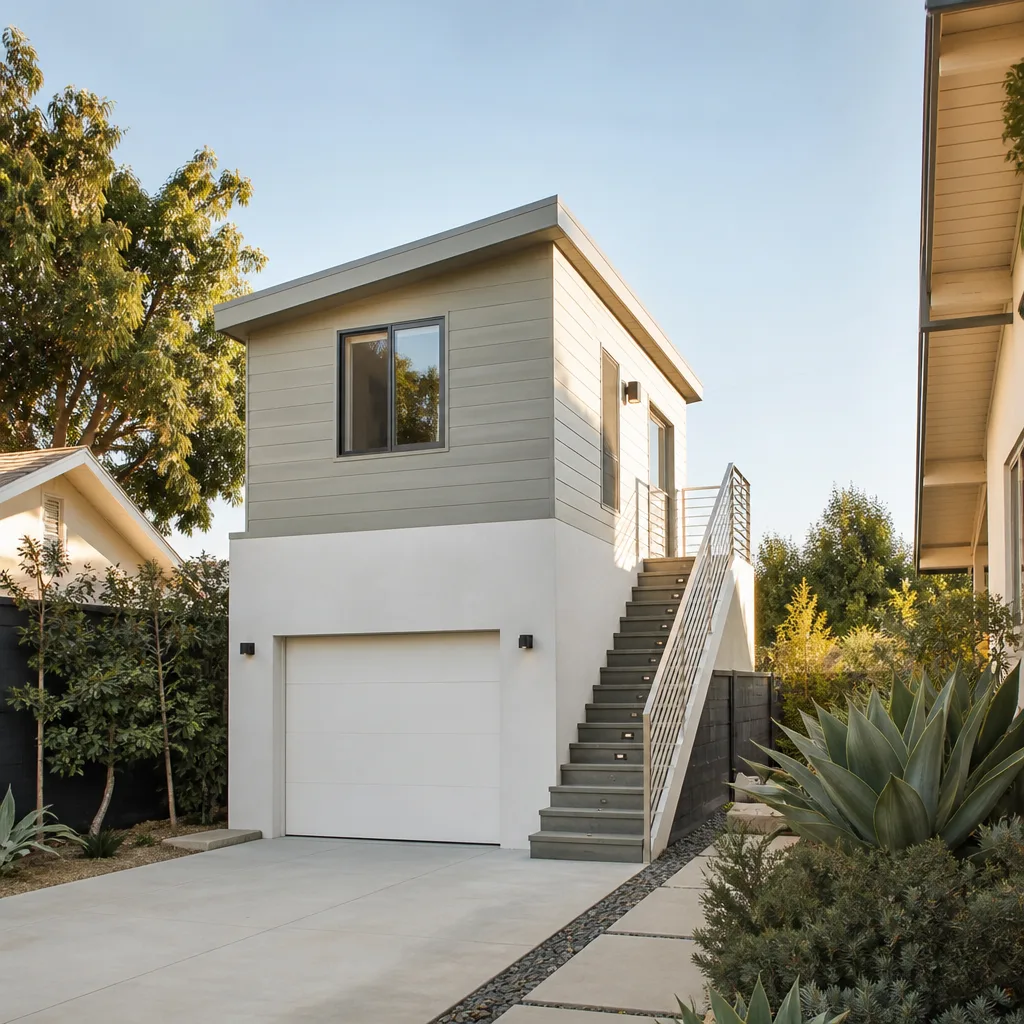
This is the question we get most from Spring Valley homeowners who’ve recently finished an ADU build. The answer depends on whether the unit is detached or attached to the primary home, and it depends on whether the build ran as a fully separate service or tied into the existing one.
For detached ADUs, the typical layout in Spring Valley looks like this:
- Electrical: A subpanel inside the ADU, fed from a breaker in the primary home’s main panel. The ADU subpanel has its own main breaker, but the primary home’s main breaker kills everything if you need the whole property dark.
- Water: A dedicated shutoff valve on the line branching to the ADU, usually at the exterior wall of the primary home or in a utility box near the property line. The city main shutoff at the meter kills both.
- Gas: A separate valve at the meter if the ADU has its own meter, or a tee off the primary home’s line with a shutoff at the ADU’s exterior wall. If the unit uses electric appliances, skip this step.
For attached units like a garage conversion, the ADU typically shares the primary home’s main panel and water main, with branch shutoffs inside the converted space. That means a homeowner can’t isolate the ADU without shutting down the primary home too, which is why the card on the next page matters more than ever.
If you don’t know which layout you have, walk the property with a flashlight and a notebook before the first monsoon hits. Find the meter, find the main panel, and trace each line. If you’re uncertain, ask the builder who did the work, or bring in a licensed electrician or plumber to map it.
The Shutoff Card Every ADU Should Have Posted Inside
Every Spring Valley ADU should have a laminated card posted inside, on the back of the entry door or inside a kitchen cabinet. The card lives there permanently because during an emergency nobody has time to search.
Put these fields on the card. Fill them in by hand or print them, and update them any time a panel or valve changes:
- Gas meter location – describe it in plain language (“north wall of primary house, behind the AC unit”). Note the shutoff direction (usually a quarter-turn).
- Water main location – at the meter, and where the ADU branch valve sits.
- Electrical main panel location – and the specific breaker that feeds the ADU subpanel.
- Primary home contact – name and phone of the person renting to you or living in the main house.
- Utility outage numbers – NV Energy and Southwest Gas, plus the water district.
- Emergency contact – 911, and the non-emergency Clark County line.
- Date verified – so anyone using the card knows how current it is.
We’ve seen tenants during a gas smell in the unit waste ten minutes calling the homeowner before they touched a valve. The card fixes that. Make one for the primary home too, and keep a copy of both in each dwelling. It’s the cheapest emergency investment on this whole list, and it’s the one people skip.
Spring Valley’s Natural Hazard Calendar
Spring Valley has a specific seasonal rhythm that matters for ADU residents. Plan around it before the season arrives.
July through September: monsoon and flash flood season
The valley’s monsoon window runs July through mid-September, and the Spring Valley drainage basin collects runoff from the Spring Mountains fast. Streets that look dry in the morning can carry a foot of water by afternoon. For ADUs with a slab on grade or a low garden wall, the biggest risk is water intrusion under the door and through weep screed gaps. Check door thresholds and the grading outside the unit in June, not after the first storm.
May through September: extreme heat protocol
Occupied ADUs in Spring Valley face a real hazard when the AC fails or the power drops during a 110°F afternoon. Inside a poorly insulated detached unit, temperatures can climb 15 to 20 degrees above outdoor air within an hour of AC loss. Plan a buddy protocol: if the AC fails, the tenant moves to the primary home or the nearest cooling center (Clark County publishes a list each summer) until repairs finish. Check the unit’s HVAC filter monthly from May to September, and confirm the unit has working CO detectors if any gas appliance runs inside.
December through February: the rare freeze
Freezes are uncommon in Spring Valley, but they happen, and they’re exactly when pipes burst. Exposed lines on detached ADUs and irrigation lines feeding the ADU landscaping are the weakest points. Before a projected freeze, drip the faucets, disconnect hoses, and shut off the ADU’s exterior irrigation valve. If the unit will sit empty for a stretch, have someone check it after each freeze.
The Two-Household Evacuation Plan
An evacuation order from Clark County doesn’t care that the ADU tenant has a separate lease. If the order goes out, two households need to move together or separately on purpose, not by accident.
Write the plan down and give both households a copy. It should cover:
- Who is responsible for what. Primary home occupant shuts off the gas and water main; ADU tenant grabs the shared go-bag, locks the unit, and confirms the tenant’s own medical needs are covered.
- The meeting point. Pick a spot outside the immediate neighborhood – a specific grocery store parking lot on the west side of the valley works well.
- The contact tree. One person calls the other, who calls a designated out-of-area family member. Text first if the lines are jammed.
- The pets and vehicle plan. Who takes which vehicle, and where the pet carriers live.
- The return check. Neither household enters the property until both are back, because gas leaks and structural damage are easier to spot as a pair.
- The responsibility waiver. In writing, note that the tenant is responsible for their own belongings and the homeowner for the structure. This matters at claim time.
We’ve worked with Spring Valley homeowners on ADU builds in Spring Valley who learned the hard way that a text thread isn’t a plan. Nobody can find the thread under stress. Print it, laminate it, and post it next to the shutoff card.
The Minimum ADU Emergency Kit for the Mojave
The standard Red Cross guidance of 1 gallon of water per person per day was written for temperate climates. In Spring Valley, where a summer outage can hit 110°F and last a full day, the working number is 3 gallons per person per day for 72 hours – roughly triple the national standard. That’s 9 gallons per person minimum for a 3-day event. A two-person ADU needs 18 gallons stored before the season starts.
That’s the headliner. The full kit should also include:
- Cooling: battery-powered fans, cooling towels, and a solar phone charger.
- Light: LED flashlights (one per room), headlamp, and spare batteries. No candles – fire risk inside a unit with limited exits.
- First aid and medication: 7-day supply of any prescriptions, plus a written list of meds and allergies.
- Communication: a battery or hand-crank NOAA weather radio, because cell towers overload fast during a regional event.
- Food: 3 days of no-cook food per person, plus a manual can opener.
- Documents: copies of lease, insurance, ID, and the shutoff card in a waterproof bag.
- Sanitation: hand sanitizer, garbage bags, and a bucket with a lid.
- Tools: work gloves, a multipurpose shutoff wrench, and duct tape.
Rotate the water and food every six months. Put a reminder on your calendar for the first weekend of May and the first weekend of November.
Insurance Gap Checklist: What Homeowners Policies Miss
This is where Spring Valley homeowners get surprised. A standard homeowner policy usually covers the dwelling and structures on the property, which typically includes a detached ADU as an “other structure.” But the details matter, and the questions you ask before a claim are worth more than the ones you ask after.
Ask your insurer these questions in writing:
- Is the ADU covered as a separate structure with its own replacement cost limit, or is it lumped into the 10% “other structures” allowance that often falls short of a full rebuild?
- Does the policy cover loss of rent if the ADU becomes uninhabitable after a covered event? A rental ADU is income; the policy should treat it that way.
- Does the policy cover the tenant’s belongings? Usually no – that’s the tenant’s renters policy. Make sure the lease requires one.
- Is flood damage covered? In Spring Valley, standard policies exclude flood. A separate flood policy or an endorsement may be needed given the monsoon risk.
- Does liability extend to the ADU tenant and their guests? Confirm the limits and whether an umbrella policy makes sense.
- Does a home-based business run from the ADU change the coverage? If a tenant runs a business from the unit, ask.
Get the answers in writing and file them with your shutoff card. A five-minute annual review with your agent prevents the worst outcome at claim time: discovering the ADU’s replacement cost was underestimated by six figures.
Common Mistakes to Avoid
- Assuming the ADU is on its own meter. Most detached Spring Valley ADUs share the primary home’s water main and electrical service. A homeowner who shuts the ADU breaker thinking it isolates the unit may be leaving half the property live.
- Storing emergency water in a hot garage. Summer garage temps in Spring Valley frequently pass 120°F. Water bottles stored there degrade fast and can leach plastic taste. Store water inside the unit, in a cool closet.
- Forgetting the tenant doesn’t know the property. A tenant who moved in last month has no idea where the gas meter is. Walk them through it on move-in day, not after a leak.
- Relying on cell phones during a regional event. Monsoon storms knock out towers across the valley. Every ADU should have a battery-powered weather radio.
- Skipping the flood endorsement. Standard homeowner policies exclude flood, and monsoon runoff is a real risk in the Spring Valley drainage basin. If the unit flooded tomorrow, the policy likely wouldn’t pay.
- Keeping the go-bag in the primary home only. If the two households get separated, the ADU tenant needs their own kit. Build two.
- Not updating the shutoff card after a remodel. If the ADU added a water heater or moved a panel during a home addition, the card from before the work is wrong.
When to Call a Professional
Some of this you can handle yourself: hanging the card, building the kit, writing the evacuation plan. But specific scenarios call for a licensed pro, and it’s worth calling before something goes wrong rather than after.
Call a professional if: you can’t find or safely operate the gas or water shutoff; the ADU subpanel isn’t labeled clearly; any part of the unit has flooded in the past and was dried out without a moisture inspection; the HVAC hasn’t been serviced in over a year; or you’re unsure whether the ADU’s electrical load was calculated correctly when the unit was built. A licensed electrician, plumber, or HVAC tech is the right call every time for these. High-tension work, gas lines, and panel work are not DIY territory.
At Lodgewick ADU Builders Spring Valley, we see the aftermath of these gaps often enough to know the fix is cheap when it’s planned and expensive when it’s not. Free estimates in Spring Valley – call (844) 780-4284 and we’ll walk through the property with you, or help you scope an ADU build that gets the shutoffs right from the first day.
Frequently Asked Questions
Walk outside and look at the meter panel. A single meter serving both dwellings is the most common setup for detached ADUs in Spring Valley. If you see two meters side by side, the unit is separately metered. If you’re not sure, don’t touch anything – call a licensed electrician to map the circuit. Call (844) 780-4284 for a free estimate if you’re also considering a build or conversion.
Plan on 3 gallons per person per day for 72 hours, which is triple the national standard. A two-person ADU should store at least 18 gallons. Spring Valley summer outages can push indoor temperatures well past 100°F, and dehydration risk climbs fast. Rotate the supply every six months.
Usually as an “other structure,” but often with a limit that falls short of full rebuild cost. Ask your insurer in writing whether the ADU has its own replacement cost limit and whether loss of rent is covered. Flood is typically excluded, which matters in the Spring Valley drainage basin. Call (844) 780-4284 if you want a free estimate on a new ADU or garage conversion that’s built to make insurance easy.
Move to higher ground inside the unit and away from exterior doors, then confirm the primary home occupant knows you’re there. Don’t drive, and don’t cross running water on foot. Keep the shutoff card in hand – if water enters the unit, the water main at the meter is the fastest way to stop more coming in.
In writing, with a meeting point outside the neighborhood, a designated out-of-area contact, and a clear split of responsibilities (who shuts off gas, who grabs the go-bag). Both households get a copy. Update it any time a tenant changes. A verbal plan won’t survive the stress of an actual event.
Yes, and it’s worth discussing during the design phase. Separate gas, water, and electrical service costs more upfront but simplifies emergency isolation, insurance, and rental management. We work with Abodu, Cover, Dvele, and Mighty Buildings on builds that let you decide. Call (844) 780-4284 for a free estimate.
The Bottom Line
An ADU emergency plan isn’t about preparing for a disaster. It’s about closing the small gaps that turn a manageable event into a five-figure one. Post the shutoff card. Build a kit sized for the Mojave, not the national average. Write the two-household evacuation plan and give both households a copy. Review your insurance with the six questions above and file the answers. These are afternoon projects that pay for themselves many times over, and every Spring Valley ADU – whether it’s a new Cover build or a converted garage – should have all four done before the first monsoon watch of the season. When you’re ready to plan an ADU, a garage conversion, or a home addition with utility isolation built in, call (844) 780-4284 for a free estimate.
Written by the team at Lodgewick ADU Builders Spring Valley.