How Long Does It Take to Build an ADU in Spring Valley, NV?
In Spring Valley, a detached ADU takes 6 to 11 months from first phone call to certificate of occupancy, and a JADU (junior accessory dwelling unit, meaning a conversion inside or attached to your existing house) takes 4 to 7 months. The permit review and the on-site build get most of the attention, but your real timeline is set by something most guides never mention: the sewer or septic verification that runs on its own clock before a building permit application is even filed. If you want to know what your specific lot is facing, call (844) 780-4284 and we’ll walk through it with you.
Key Takeaways
- Sewer/septic verification runs first, on a separate timeline through Nevada DETR and Clark County Water Reclamation, and can add 4 to 8 weeks.
- Clark County plan review takes 6 to 10 weeks for a JADU or garage conversion and 10 to 18 weeks for new detached construction.
- On-site construction runs 8 to 14 weeks stick-built, or 4 to 8 weeks with a prefab shell from a manufacturer like Abodu or Plant Prefab.
- Prefab speeds up the build, never the permit review. Clark County still reviews plans, inspects at rough-in, and issues the certificate of occupancy.
- Framing a detached ADU around the old RV pad is common in Spring Valley, and it’s also where sewer surprises surface.
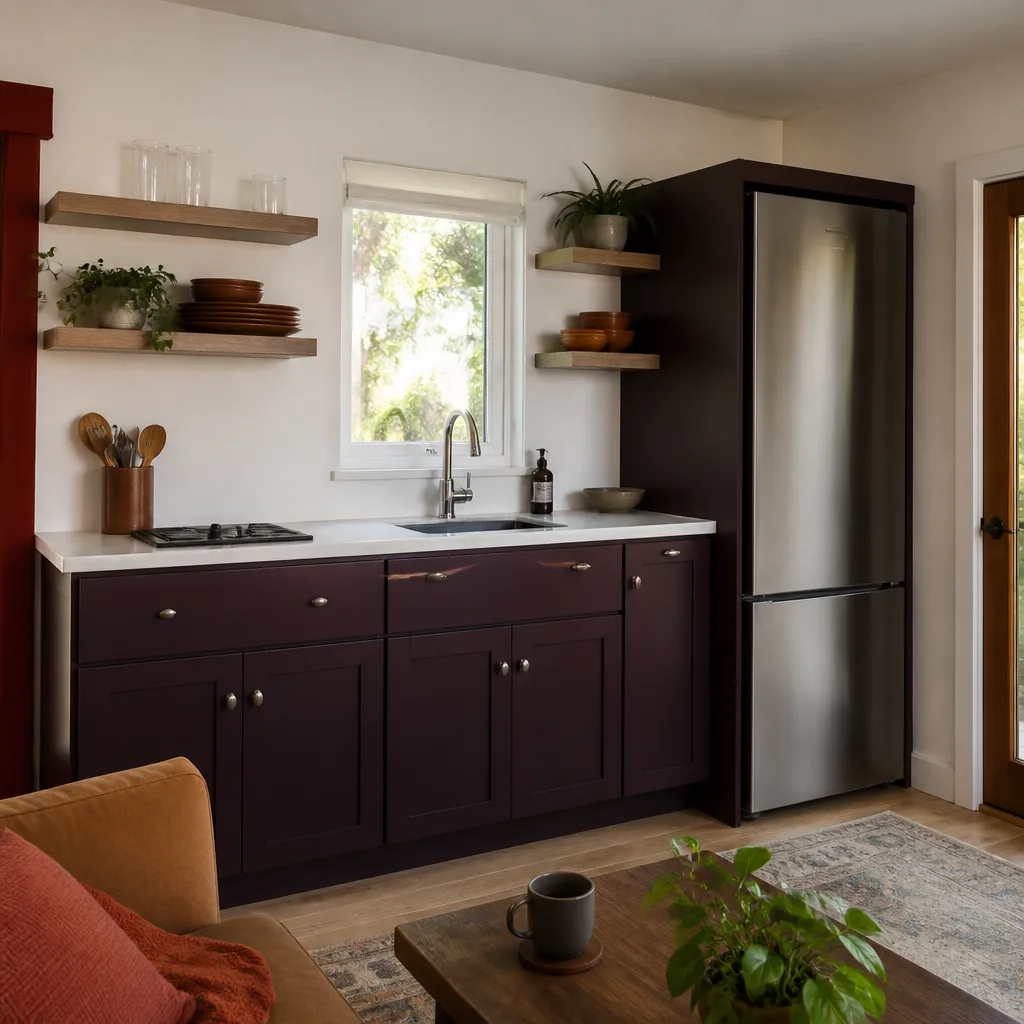
Where the Spring Valley timeline actually starts, before any permit
Spring Valley is an unincorporated Clark County community, so ADU work here runs through Clark County’s Title 30 development code rather than a city permitting department. That matters because unincorporated parcels sit on a mix of sewer connections and legacy septic systems, and Clark County Water Reclamation needs to know which one you have before a building permit can move forward. The verification itself usually takes 2 to 4 weeks, but it runs on its own clock, separate from design and separate from plan review.
This is the step to start first, not last. While an architect or designer works through the layout, the sewer check should already be underway. Run them in parallel and you shave weeks off the front of the schedule. Run them in sequence, which is what happens when nobody flags it, and you can lose 4 to 8 weeks without a single nail driven.
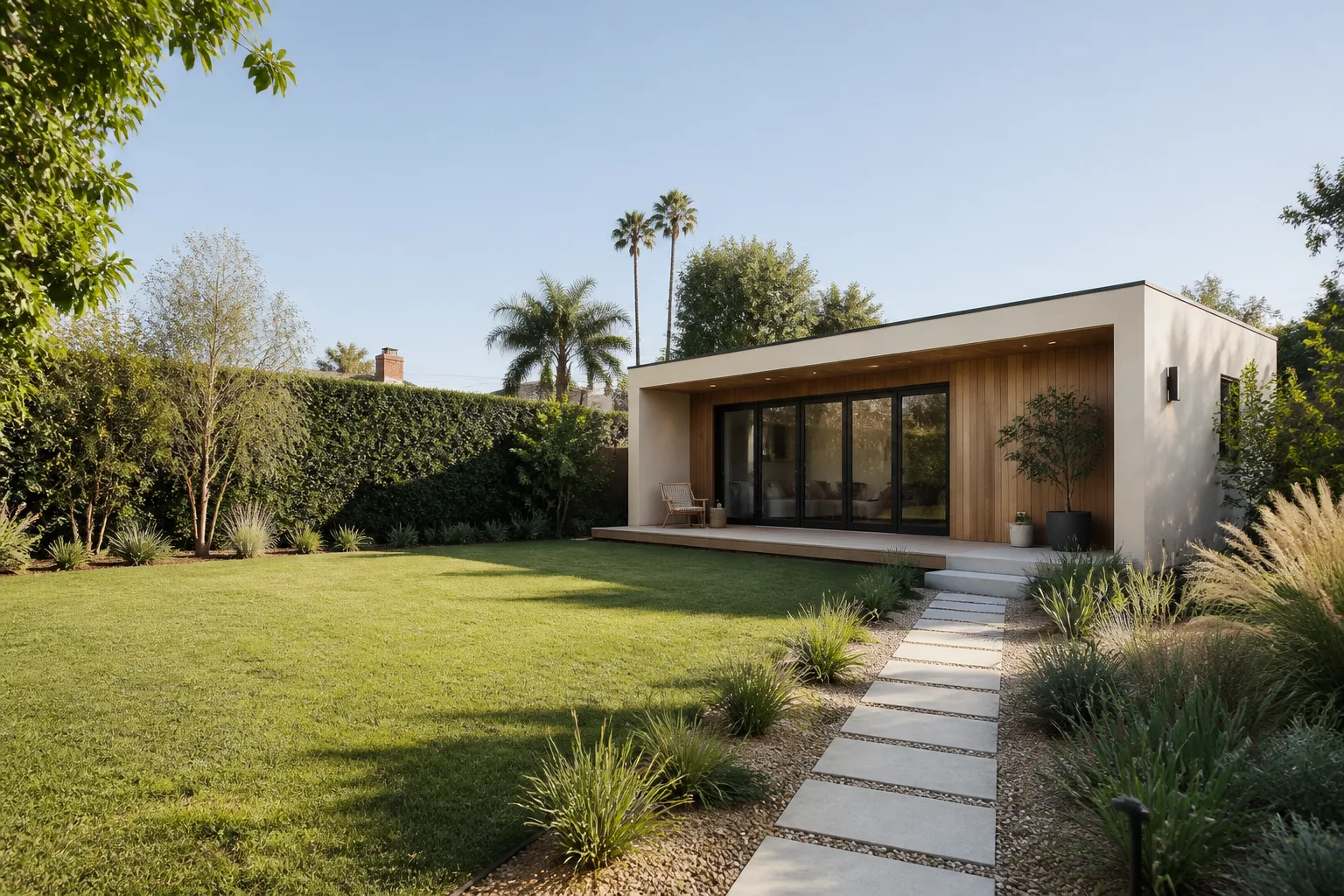
Lots here are typically about a quarter acre, with 1960s through 1990s one-story tract homes, block-wall perimeter fencing, and a detached garage or an RV pad behind the gate. That’s what makes a detached casita feasible on a Spring Valley lot when an incorporated-city parcel wouldn’t allow it. It’s also the layout that causes the most trouble once trenching begins.
The four phases, with real numbers for Spring Valley
Here’s how a detached ADU schedule breaks down on a typical Spring Valley parcel. These are the ranges we plan to, not wishful best cases.
| Phase | Detached ADU | JADU / garage conversion |
|---|---|---|
| Sewer/septic verification (runs parallel with design) | 2-4 weeks | 2-4 weeks |
| Clark County plan review | 10-18 weeks | 6-10 weeks |
| On-site construction (stick-built) | 8-14 weeks | 6-10 weeks |
| On-site construction (prefab shell) | 4-8 weeks | n/a |
| Final inspection and certificate of occupancy | 2-4 weeks | 2-4 weeks |
| Realistic total | 6-11 months | 4-7 months |
Notice that plan review is the longest single phase for a detached build. Nothing about construction method changes it. Homeowners who choose a prefab shell expecting a fast permit are always surprised to learn that Clark County reviews the plans the same way, inspects at rough-in the same way, and issues the certificate of occupancy the same way. Prefab compresses the weeks a crew is on your lot. It does nothing for the weeks your drawings sit in a review queue.
What prefab does buy you is schedule certainty on the back half and less exposure to weather. A shell from Abodu or Plant Prefab arrives largely complete, which means fewer days of framing and sheathing on a lot that gets 100°F+ summer highs for weeks at a stretch. If you’re weighing that route, our page on a new detached ADU in Spring Valley goes deeper into what changes and what doesn’t.
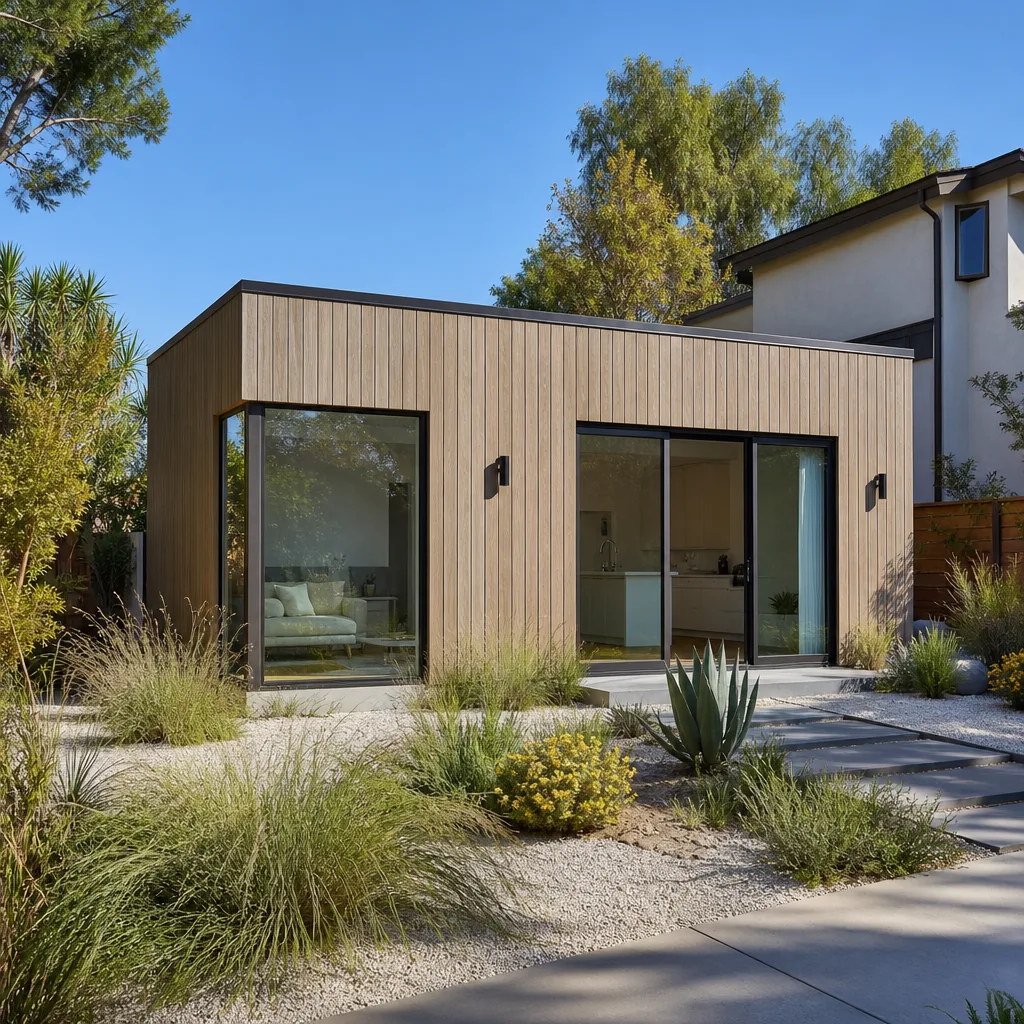
What actually blows up a Spring Valley ADU schedule
The biggest schedule killer here isn’t permit backlog or material lead times. It’s a mid-project sewer surprise. When utility trenching for a detached ADU runs back toward where the RV used to park, it often hits the old pad’s concrete and the lot’s legacy gray-water line before it ever reaches Clark County’s sewer main. When that happens, the sewer connection has to be re-routed, which triggers a plan revision and sends the whole package back through review. A 4-week delay turns into 10.
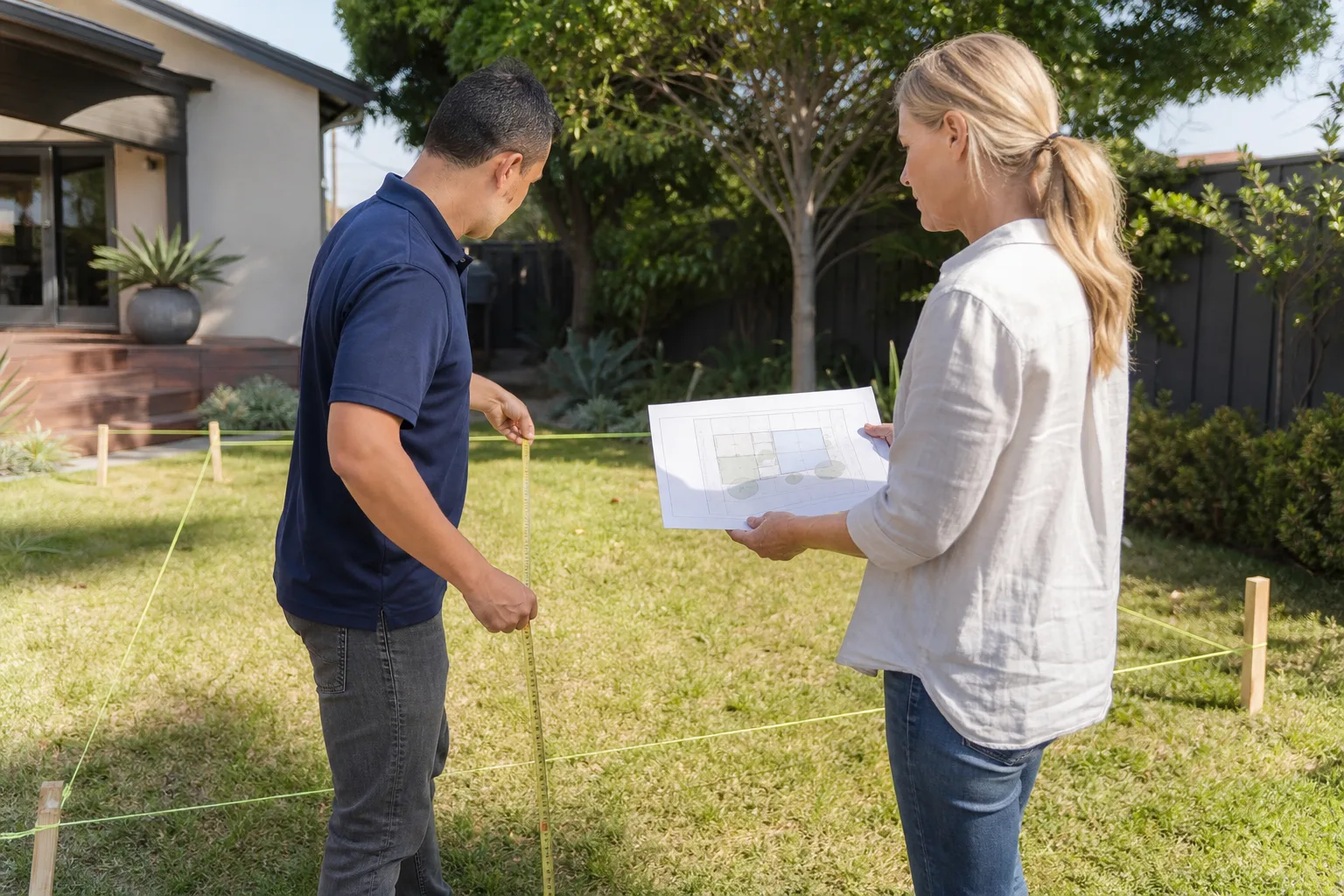
We do the utility scan and sewer verification before design is finalized specifically to prevent that. Locating the old pad edges, the gray-water line, and the sewer stub on paper first means the trench path is planned around them instead of discovered during excavation. It’s the difference between a schedule you write down and a schedule you react to.
The second schedule killer is seasonal. Mojave monsoon season runs July through September, and flash-flood risk on hardpan soil means grading and foundation pours get scheduled before mid-July or after September. Standing water on an open slab is a real problem, not a cosmetic one. A detached ADU that starts in June and misses its pour window can wait 6 to 8 weeks for safe grading conditions. Build that buffer into the calendar up front and it’s a line item. Discover it in June and it’s a crisis.
Extreme heat shapes the build in other ways too. Weeks of 100°F+ highs mean detached ADUs and garage conversions need correctly zoned, oversized HVAC and serious attic and slab insulation to stay livable through August. That’s a design decision made early, not a change order made late. James Hardie siding is a common pick on these builds for its performance in desert sun and its resistance to the monsoon dust that works into every seam.
How do prefab ADUs affect the timeline compared with stick-built?
A prefab ADU shell cuts 4 to 6 weeks off on-site construction time in Spring Valley, but it doesn’t shorten Clark County plan review at all. The build phase drops from 8 to 14 weeks down to 4 to 8 weeks because the shell arrives largely finished. The review phase stays at 10 to 18 weeks, because Clark County reviews the plans regardless of who fabricates them.
That’s the number most prefab marketing glosses over. If someone tells you a prefab ADU will be done in 90 days, ask them what phase the 90 days covers. Almost always it’s the on-site portion, with permitting excluded. A realistic prefab timeline for a Spring Valley detached ADU is still 6 to 9 months total, just weighted differently than a stick-built project.
Prefab does have a genuine advantage beyond speed: predictability. The shell is built indoors, so it isn’t exposed to monsoon rain or the July pour window problem. Schedules that depend on a pour date are inherently more fragile in this climate than schedules built around a factory delivery. Brands like Mighty Buildings and Cover, alongside Abodu and Plant Prefab, give you options across a wide price and finish range, and we match the manufacturer to your lot, your budget, and the schedule you actually need.
What the written schedule looks like, and why it matters
Every Lodgewick ADU Builders Spring Valley project starts with a phased calendar, written down and handed over before work begins. Not “approximately six to nine months,” but a dated calendar with the sewer verification submission date, the permit submission date, target inspection dates, and the construction start date. The Kingswell Guarantee backs that calendar: a written price before any work starts, a defined arrival window, a clean job site, and a written guarantee on every project, with a free return visit if the work fails inside the 365-Day Done Right Promise period.
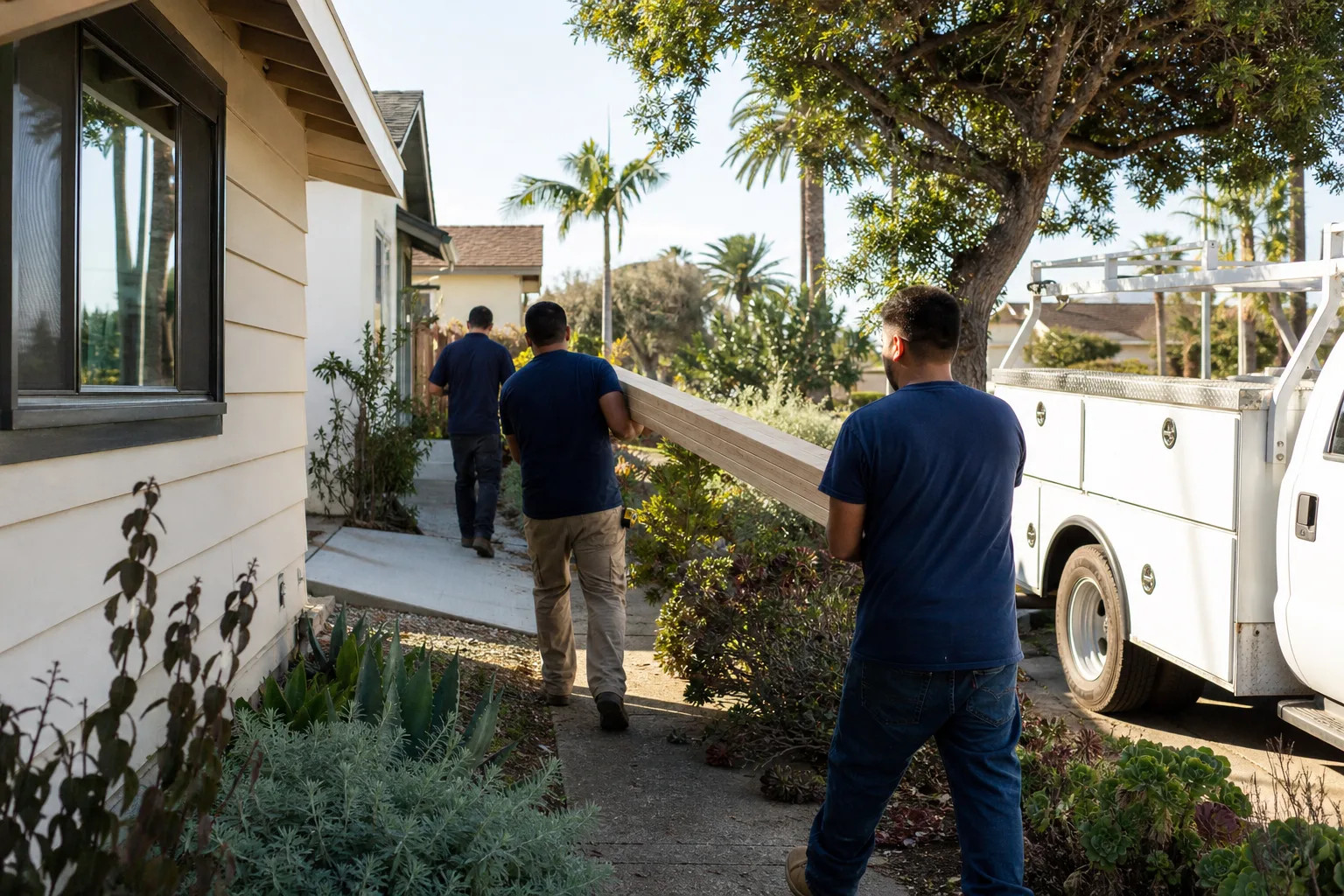
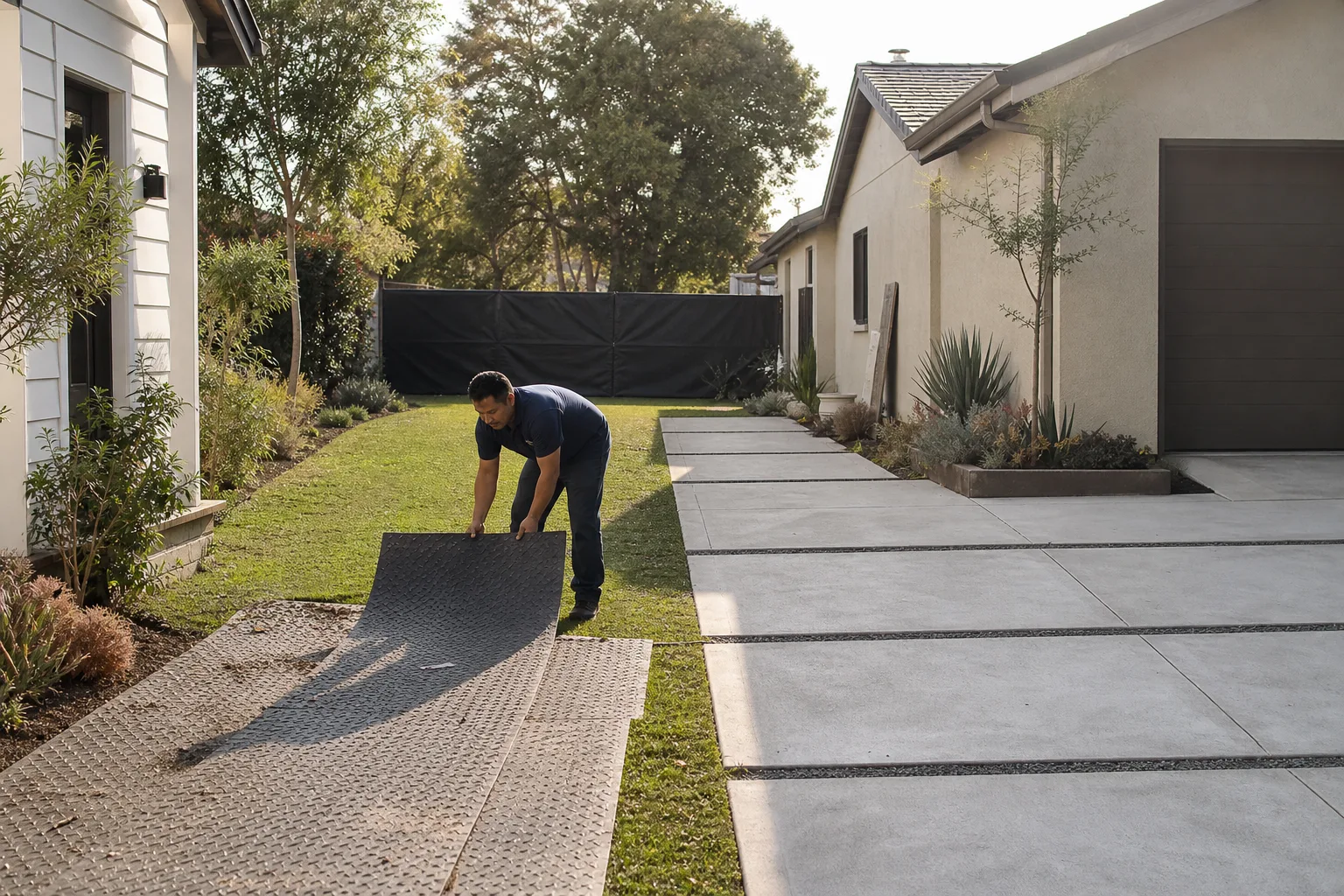
That matters most in the middle of a build, when a homeowner wants to know where things stand. Our technicians have up to 16 years of experience and work across established ADU brands and materials, and a live person answers the phone 24 hours a day if you need a status update from your own written calendar rather than a voicemail loop. Background-checked, uniformed technicians are on every job site, so you always know who’s on your property. A lodge is a small house on a larger property, which is exactly what we’re building for you.
FAQs
A detached ADU in Spring Valley takes 6 to 11 months from start to certificate of occupancy, and a JADU or garage conversion takes 4 to 7 months. Sewer or septic verification runs first on its own 2 to 4 week clock, Clark County plan review takes 6 to 18 weeks depending on type, construction takes 4 to 14 weeks, and final inspection adds 2 to 4 weeks. Call (844) 780-4284 for a written schedule built around your lot.
No. Prefab shells shorten on-site construction to 4 to 8 weeks but leave Clark County plan review unchanged at 10 to 18 weeks for a detached ADU. The county still reviews the drawings, inspects at rough-in, and issues the certificate of occupancy regardless of who fabricates the shell. Prefab is worth it for schedule certainty and weather exposure, not for a faster permit.
A mid-project sewer surprise delays an ADU build more than anything else in Spring Valley. Trenching back toward an old RV pad often hits the pad’s concrete and the lot’s legacy gray-water line, forcing the sewer connection to be re-routed, which triggers a plan revision and re-review. A utility scan done before design is finalized prevents most of these. Call (844) 780-4284 and we’ll walk through your lot’s utility layout before anything is drawn.
Late fall and spring are the fastest building windows in Spring Valley because grading and foundation pours avoid both the July to September monsoon season and the peak summer heat. A concrete pour scheduled before mid-July or after September avoids flash-flood risk on hardpan soil. Starting a detached ADU in June that misses its pour date can add 6 to 8 weeks. Call (844) 780-4284 for a schedule timed to the season you’re actually in.
Get a written timeline for your Spring Valley lot
If you’d rather have your lot looked at than guess at a number, Lodgewick ADU Builders Spring Valley offers a no-pressure assessment in Spring Valley. We’ll verify sewer or septic status, scan the utility path, and hand you a phased calendar with real dates. Call (844) 780-4284 for a free estimate and a written schedule.
You can also start with our home page to see what we build.
Written by the team at Lodgewick ADU Builders Spring Valley, serving Spring Valley, NV.