Last updated November 18, 2026
DIY vs Professional ADU Builders: What’s Safe to Do Yourself
Here’s the part most weekend-builder guides skip: in Clark County, the line between “I can do this myself” and “I legally can’t” doesn’t move with your skill level. It moves with permit type and how you plan to use the building. An owner-builder can pull permits for some finish work on a home they’ll occupy, but the moment that accessory dwelling unit (ADU – a second, self-contained home on your lot) is intended for renters, the rules tighten in ways that catch people mid-project. We’ve watched homeowners in Spring Valley get halfway through a build before discovering the scope they self-permitted wasn’t allowed for a rental unit. This guide walks through exactly which ADU tasks an unlicensed owner can legally pull, which ones require a licensed contractor regardless of ability, and where a legitimate hybrid project actually works.
Quick Answer
In Clark County, an unlicensed owner-builder can typically pull permits for cosmetic and finish work on an owner-occupied ADU – painting, flooring, cabinetry, landscaping, and demolition – but structural, electrical, plumbing, mechanical, and gas work legally requires a licensed contractor. The moment you state the ADU is intended for rental use, even some finish-work permits can be restricted, so the DIY scope shrinks considerably. Tasks like framing, subpanel work, and roof tie-ins aren’t “advanced DIY” – they’re licensed-only in most cases.
Table of Contents
- What Clark County’s owner-builder rule actually allows
- How rental intent changes your legal scope
- Tasks that look DIY-friendly but create costly rework
- Where legitimate hybrid projects work
- How DIY work voids a contractor’s written guarantee
- What to document before a pro takes over a partial project
- Common mistakes to avoid
- When to call a professional
What Clark County’s Owner-Builder Rule Actually Allows
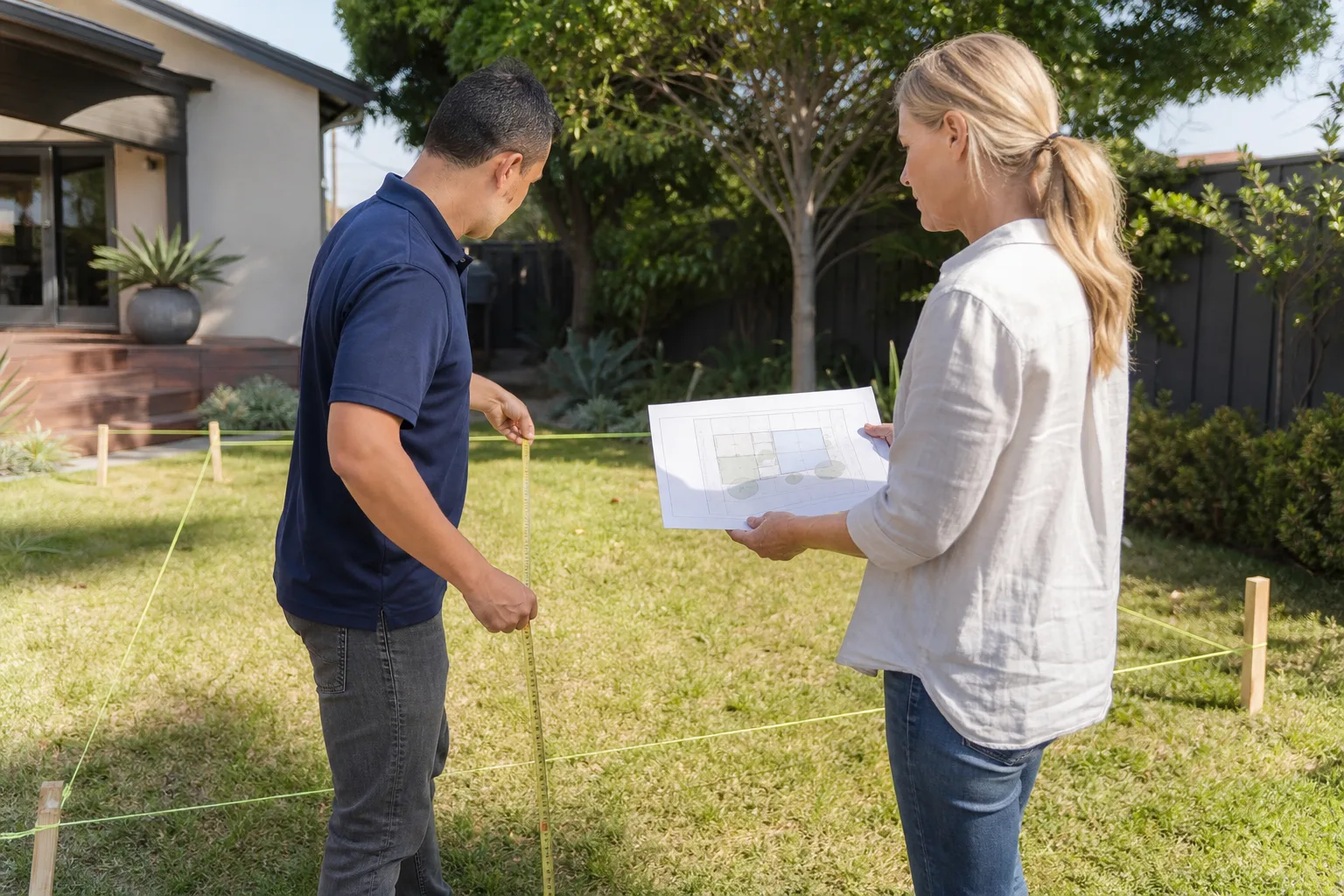
Clark County issues owner-builder permits to homeowners who plan to build on property they’ll occupy themselves. The permit exists so a person can act as their own general contractor on their own residence – not so they can run a construction business on the side. There’s a legal distinction between “I’m building this and living in it” and “I’m building this to rent out,” and the county treats those two situations differently.
For an owner-occupied ADU in Spring Valley, the tasks most commonly allowed under an owner-builder permit include:
- Interior and exterior painting
- Flooring installation (tile, laminate, vinyl plank)
- Cabinetry and countertop install (non-structural)
- Drywall finishing and texture
- Landscape, fencing, and hardscape around the unit
- Non-structural demolition and site cleanup
What stays licensed-only no matter who you are: framing, foundation and footing work, roof structure and tie-ins, electrical rough-in and panel work, plumbing rough-in, gas line work, and HVAC installation. Those aren’t “advanced DIY” – they’re regulated trades, and pulling that work without a license is a legal problem, not a pride problem. A framing mistake on a load path isn’t something a building inspector catches after the drywall is up; it’s something that changes how the whole structure behaves.
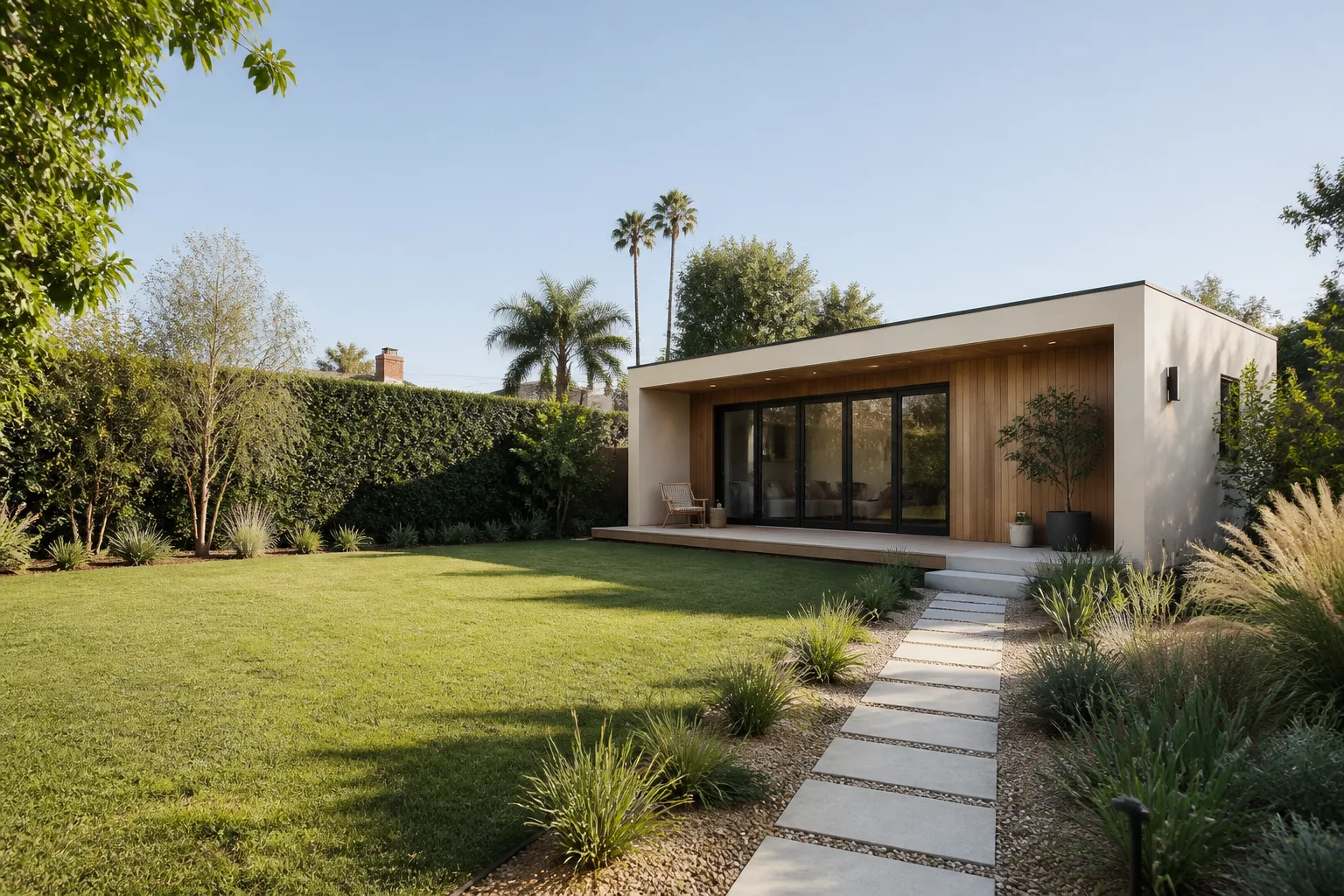
Here at Lodgewick ADU Builders Spring Valley, we’ve fielded more questions about this exact split than almost any other. Homeowners want to know where the line is before they invest a weekend. If you’re still defining what your ADU will be, our ADU Builders in Spring Valley page lays out the full scope of what a completed project looks like.
How Rental Intent Changes Your Legal Scope
This is the piece almost no DIY guide covers. Stating on a permit application that an ADU is intended for rental use can restrict what an owner-builder is allowed to self-perform. The county’s interest is straightforward: a rental unit is a dwelling other people will sleep in, and the county wants a licensed professional accountable for the life-safety systems. The moment that box is checked, the safety calculus on your permit shifts.
What this means in practice for a Spring Valley homeowner:
- Finish work that was permitted under owner-builder may need reclassification. Some categories of cosmetic work that pass for owner-occupied builds get more scrutiny when rental use is stated.
- Structural, electrical, plumbing, mechanical, and gas stay licensed-only either way. Rental intent doesn’t expand your unlicensed scope – it narrows it.
- The permit history follows the building. If you self-perform something permitted under an owner-occupied status and later rent the unit, you’ve created a documentation gap an inspector can flag during a future sale, refinance, or insurance review.
If you’re building in Spring Valley for a family member or a long-term renter, disclose that intent on the application. The only thing worse than discovering the scope limit mid-project is discovering it after you’ve built something you can’t legally rent. Our Garage Conversion Contractor in Spring Valley page walks through how garage conversions – often the most cost-effective ADU route – get scoped differently when rental use is part of the plan.
Tasks That Look DIY-Friendly but Create Costly Rework
The most expensive mistakes we’ve seen on Spring Valley ADU projects aren’t wild, ambitious work – they’re ordinary-seeming tasks done at a scale that doesn’t account for the building’s actual loads. Here’s where the rework cost lands, roughly:
- Improper framing for load paths: A wall framed without accounting for roof load or a header sized for the wrong span fails inspection before drywall goes up. Rework including removal, reframe, and inspection typically runs $4,000 – $12,000.
- Undersized subpanel: If the ADU’s subpanel wasn’t sized for the loads it actually carries (a heat pump, an EV charger, a washer-dryer stack), the fix means replacement, new wire, and re-inspection – commonly $2,500 – $7,000.
- Windows and doors set without proper flashing: Water intrusion around openings in a desert climate shows up months later as stucco staining and drywall damage. Repair including stucco patch and interior drywall runs $1,800 – $5,500.
- Slab prep and finish done without moisture control: Floor materials fail prematurely, and redoing the slab section can run $3,000 – $8,000 depending on the area affected.
- HVAC line set and drainage installed without the right slope: Condensate runs downhill into walls instead of out. Rework including opening walls, re-routing, and reassembly often runs $1,500 – $4,000.
The pattern: the work that looks visible and manageable is the work that’s governed by loads, spans, and code tables. Those aren’t aesthetic decisions. If you’re not sure what a framing table says about your header span, that’s not a knowledge gap to close over a weekend – it’s a reason to bring in a licensed professional. If you’re converting a garage into an ADU, the framing questions get more involved, which is why we cover them in detail on our Garage Conversion Contractor in Spring Valley page.
Where Legitimate Hybrid Projects Work
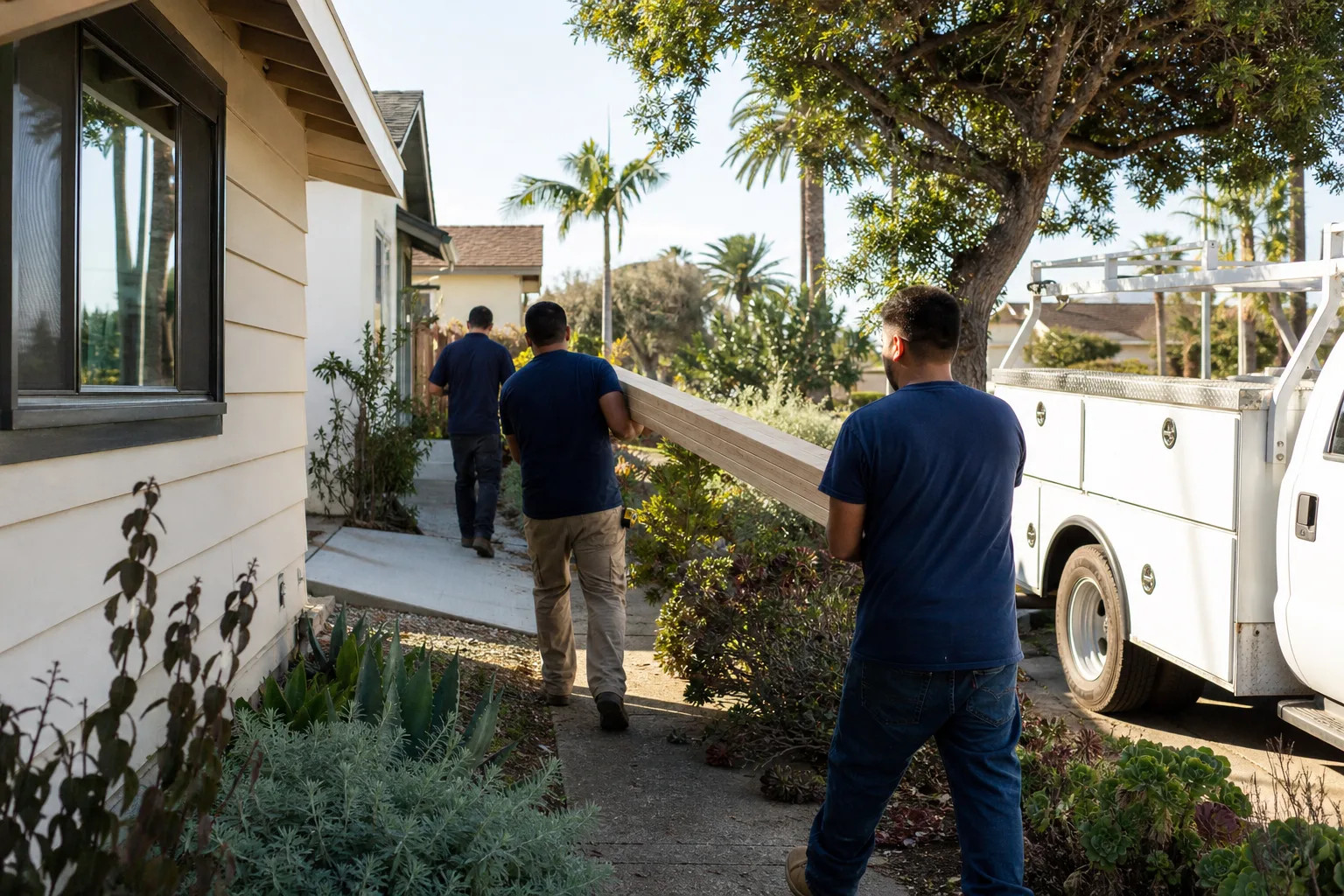
There’s a real middle path, and it’s the one we see work most consistently in Spring Valley. The homeowner handles the labor-intensive but low-risk work, and the licensed trades handle the systems. That’s not a shortcut – it’s the split that keeps the permit clean and the guarantee valid.
A hybrid ADU project typically looks like this:
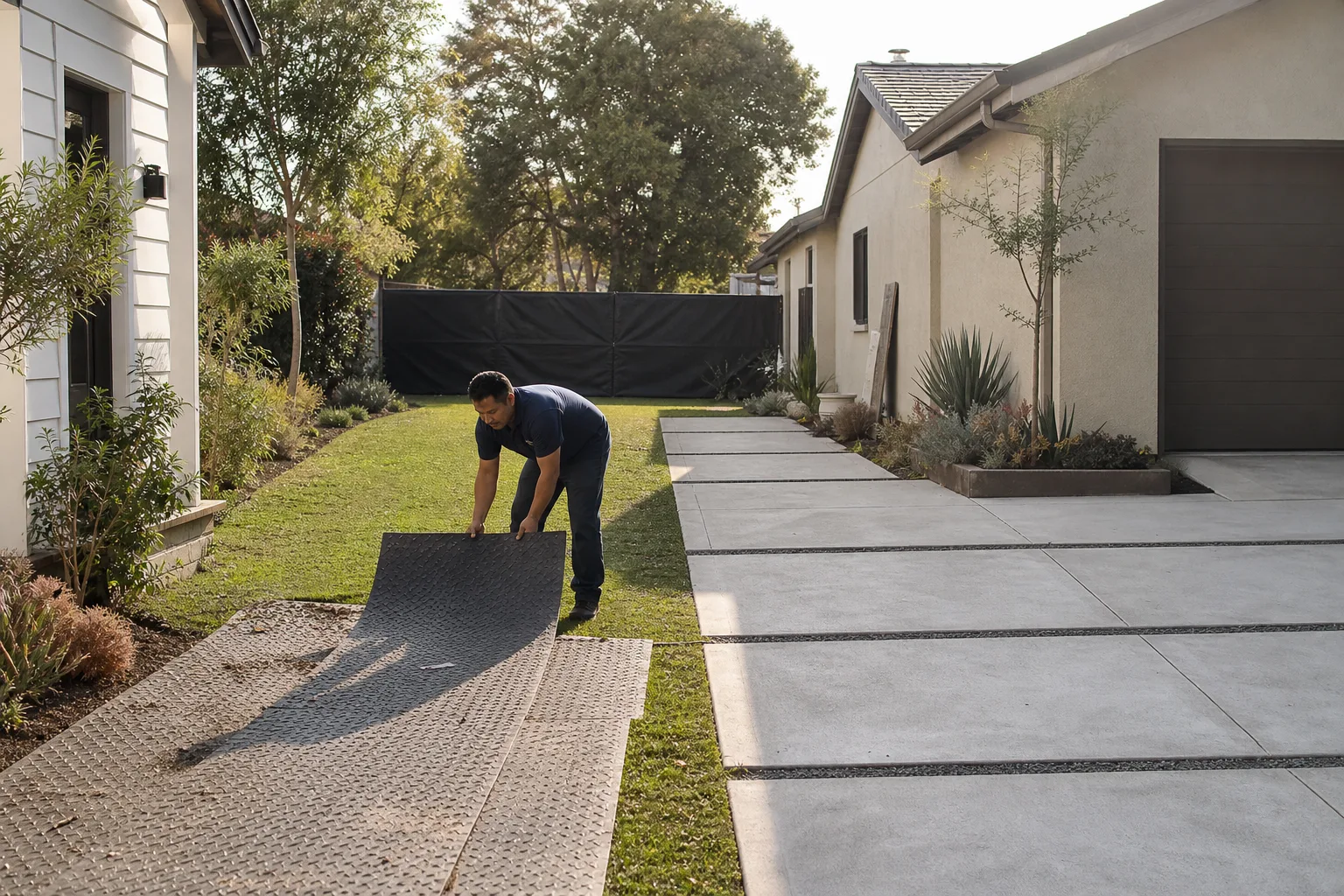
- Homeowner handles demo and cleanup. Tearing out old garage shelving, pulling up worn flooring, hauling debris, prepping the site. This is real work, and doing it yourself saves legitimate money without touching a permit.
- Homeowner handles finish work. Painting, cabinet install, trim, landscaping. These are cosmetic and non-structural, and there’s no legal exposure if the work meets code for the cosmetic trades.
- Licensed contractor handles the structural trades. Framing, foundation, roof, electrical, plumbing, HVAC, and gas – all pulled and performed under the contractor’s license.
- Inspections stay with the licensed scope. Rough-in inspections belong to the licensed trades. The homeowner’s finished work and the licensed trade’s rough-in don’t get tangled, and the permit record stays clean.
This hybrid model works well for homeowners in Spring Valley who want to keep their hands in the project without risking the whole build. It’s also the model that preserves your contractor’s written guarantee, because the licensed scope is clearly documented, and the boundary between “homeowner’s portion” and “contractor’s portion” is written down before work starts. If your project is a home addition rather than a standalone ADU, our Home Addition Contractor in Spring Valley page covers how the same split applies.
How DIY Work Voids a Contractor’s Written Guarantee
A written guarantee – the kind that commits a builder to come back and fix something that fails – operates on a simple premise: the work covered was done by the party warranting it. When a contractor takes over a partial project, any guarantee on the finished work depends on the contractor being able to verify what’s underneath the finish surfaces. That’s the piece most partial-project homeowners don’t expect.
Here’s how a written guarantee like the 365-Day Done Right Promise gets affected by prior DIY work:
- The guarantee covers the contractor’s work, not the homeowner’s. A properly written guarantee will spell out that it applies to the work the contractor performed, not to work the homeowner did before or alongside the build.
- Prior framing or wiring creates verification problems. If the contractor can’t see or verify what’s behind the drywall, the guarantee on those assemblies gets limited or excluded.
- Inspection failures tied to prior work can void the guarantee on the whole assembly. A failed rough-in caused by earlier unpermitted framing work can eliminate the guarantee on that entire wall section, not just the framing.
- A written guarantee is only as good as the documentation behind it. This is why Lodgewick delivers the written guarantee on every project before work begins – and why that guarantee is only enforceable when the scope and history of work are disclosed up front.
None of this means a contractor won’t take over a partial project. It means the boundary gets written down, checked, and reflected in what the guarantee covers. If you’ve already done some DIY work on a Spring Valley ADU project, our team at Lodgewick ADU Builders Spring Valley home can walk through what a takeover guarantee looks like in your specific case.
What to Document Before a Pro Takes Over a Partial Project
If you’ve already started a DIY ADU project and want a licensed contractor to finish it, the single most valuable thing you can do is document what’s underneath the surfaces – before anyone touches the drywall. This is the difference between a smooth handoff and a project that stalls on verification. Here’s the sequence we walk every Spring Valley homeowner through:
- Pull your permit history. Every permit you opened, every inspection you passed, every item that was corrected. The county’s record is the baseline.
- Photograph exposed work. Before drywall goes up, photograph framing, wiring, plumbing, and insulation – inside walls, under the floor, above the ceiling. These photos become part of the file.
- Get an inspection on what’s been covered up. If work is already behind drywall, arrange for an inspector or the licensed trade to verify it before any contractor quotes the finish work.
- Write down the scope you performed. Which tasks, which dates, which materials. A contractor taking over will price the finish work differently depending on what’s beneath it.
- Disclose any failed inspection or rework. Hiding a failed inspection is the fastest way to lose the guarantee on the entire project. Disclosing it is the fastest way to keep it.
- Get the boundary written down. The contractor’s written scope should state explicitly which portions are homeowner-performed and excluded from the guarantee, and which are contractor-performed and covered.
Do this documentation step even if you’re not sure you’ll hire a contractor to finish. It costs nothing, and it preserves your options.
Common Mistakes to Avoid
- Assuming “owner-builder” and “unlicensed” mean the same scope. Owner-builder permits are tied to owner-occupancy, and the scope shrinks the moment the ADU is intended for rental. Read the permit application carefully before you fill it out.
- Starting structural work before confirming the permit scope. In Spring Valley, some homeowners begin framing under an owner-builder permit before checking whether their rental-use declaration changes the scope. Undoing structural work that fails inspection is more expensive than waiting for a permit determination.
- Treating the subpanel as a DIY task. Electrical panel work is licensed-only for good reason. An undersized subpanel is the single most common expensive rework item we see on partial ADU projects.
- Setting windows and doors without proper flashing in a desert climate. Spring Valley’s intense sun and occasional monsoon rain expose flashing mistakes faster than a coastal climate would. Water intrusion around openings shows up months after install, when the stucco gets patched.
- Renting the unit out after self-performing work that wasn’t permitted for rental use. The documentation gap follows the building, not the permit holder, and it surfaces during future sale, refinance, or insurance review.
- Failing to photograph exposed work before drywall. This one decision – whether to photograph the inside of the walls – is what separates homeowners who get a written guarantee on the finished work from homeowners who get a limited-scope agreement.
- Choosing a contractor who won’t put the scope boundaries in writing. If a contractor is willing to take over a partial project without documenting which portions are excluded from the guarantee, that guarantee isn’t worth much.
When to Call a Professional
Some scope decisions on an ADU have a right answer regardless of your skill level. If any of the following is true, the licensed-trade decision is made for you: you’re building for rental use, you’re changing the structure (adding a wall, opening a wall, modifying a roof line, or pouring a new slab section), you’re touching electrical or plumbing at any rough-in or panel level, or you’re installing HVAC or a gas appliance. Those are the categories where the “I can figure it out” mindset creates the most expensive rework we see on Spring Valley ADU projects. A licensed contractor – not just an experienced one – is legally required here.
Lodgewick ADU Builders Spring Valley offers free estimates in Spring Valley – call (844) 780-4284. Our technicians have up to 16 years of experience, the written guarantee is delivered before any work starts, and if the work fails within the guarantee period, we come back for a free return visit. Every estimate is backed by the Kingswell Guarantee: written price before work starts, real arrival window, clean job site, written guarantee on every project.
Frequently Asked Questions
Yes, for an owner-occupied ADU, an unlicensed homeowner can typically pull owner-builder permits for cosmetic and finish work, site cleanup, and non-structural demolition – but structural, electrical, plumbing, mechanical, and gas work require a licensed contractor. If the ADU is intended for rental use, the DIY scope shrinks because the county treats rental units differently on the permit application. Call (844) 780-4284 for a free consultation on your specific scope.
The failed inspection has to be corrected by a licensed contractor before the project can proceed, which means you pay twice – once for the original work, and again for the demo and rework – plus the inspection fees and the schedule delay. Typical rework on framing, subpanel, and roof tie-in failures in Spring Valley runs $2,500 – $12,000 depending on scope.
This depends on which portions you self-performed and how the permits were filed. If you stated owner-occupancy on the permit application but later rent the unit, you’ve created a documentation gap that can be flagged during a future sale, refinance, or insurance review. We recommend disclosing rental intent up front and documenting any self-performed work carefully. Call (844) 780-4284 for a free scope review before you rent.
No – a written guarantee covers the contractor’s work, not the homeowner’s. If a contractor takes over a partial project, they’ll document which portions are excluded from the guarantee, and any hidden work behind the walls will need to be verified before the guarantee on those assemblies applies. This is why upfront documentation before drywall goes up is so valuable.
The safest hybrid split is homeowner labor on demo, cleanup, painting, cabinetry, and landscaping; licensed trades on all structural, electrical, plumbing, mechanical, and gas work. This split is standard on many of our Spring Valley projects, and it’s the model that preserves the written guarantee on the contractor’s scope while letting homeowners keep real skin in the project. If you’re considering a hybrid, call (844) 780-4284 for a free estimate before purchasing materials.
Yes, and hiding it is the single fastest way to lose a guarantee. Disclose every task you performed, including any failed inspection or rework. If a contractor takes over a partial project and later discovers undisclosed DIY work, the written guarantee on the affected assemblies is void – even on work the contractor performed. Disclosure protects your guarantee.
The Bottom Line
The DIY-versus-hire question on a Spring Valley ADU isn’t really about how handy you are – it’s about what the permit type and your rental intent legally allow. In Clark County, an owner-builder can pull finish work for an owner-occupied ADU, but the licensed trades stay licensed regardless of your ability, and rental intent narrows the DIY scope further. Hybrid projects work well when the split is documented before anyone touches the walls. If you’re building in Spring Valley, the two decisions that protect your project most are: verify your legal scope before you pull a permit, and document every self-performed task before the drywall goes up. Call (844) 780-4284 for a free estimate – the written price comes before any work, always.
Written by the team at Lodgewick ADU Builders Spring Valley.