Last updated November 18, 2026
DIY vs Professional Home Addition Contractor: What’s Safe to Do Yourself
Nevada law lets a homeowner act as their own general contractor on a home addition. That part is true, and plenty of Spring Valley homeowners have done it. But there’s a catch that doesn’t show up until the end: Clark County’s building department still requires a licensed contractor for electrical, plumbing, and mechanical work, no matter who’s holding the owner-builder permit. We’ve watched homeowners spend a year managing their own addition, pass every rough inspection, and then hit a wall at final because the friend who “knows wiring” isn’t licensed to sign off. This guide draws the line task by task – what’s safe and legally fine to do yourself, what quietly costs more than it saves, and how to run a hybrid build without voiding your own permit.
Quick Answer
You can legally DIY parts of a home addition in Spring Valley – demolition, insulation, painting, and finish trim are all reasonable owner-builder tasks that save real money. You cannot legally do your own electrical, plumbing, or mechanical work in Clark County, and structural framing and foundation work almost always cost more to DIY than they save when you factor in re-work, inspection failures, and engineering. The smart middle path is acting as your own general contractor while hiring licensed subs for the regulated scopes.
Table of Contents
- What Nevada law actually says about DIY home additions
- Tasks where DIY genuinely saves money
- Why framing and foundation DIY usually backfires
- How to legally act as your own general contractor
- The permit paperwork most homeowners miss
- The insurance gap you need to cover
- Full professional build vs. hybrid vs. full DIY
- When it’s time to call in a pro
What Nevada Law Actually Says About DIY Home Additions
Here’s the piece of the puzzle that catches people. The Nevada State Contractors Board issues owner-builder permits, and under NRS 624.031 an owner can build a structure on their own property for their own use without a contractor’s license. That’s the rule people hear about and stop reading. The rest of the story is in the local code, not the state statute.
Clark County’s building department layers requirements on top of that. For any addition that includes electrical, plumbing, or mechanical (HVAC) work, the permit and the work must be performed by a licensed specialty contractor – a C-2 for electrical, C-1 for plumbing, C-21 for HVAC, referencing NRS 624. Under the owner-builder exemption you cannot personally wire the new bedroom or run the gas line for the water heater and expect it to pass final. The inspector will ask for the licensed sub’s name and license number.
That’s the trap: most DIY additions are inspected twice. The first rough inspection happens before drywall goes up and passes fine, because nobody’s checking licenses at that stage. The second inspection – the final – is where the gap surfaces. By then the wall is closed, the paint is dry, and you’re paying a licensed electrician to open a finished wall so they can re-pull wires they can’t legally claim were theirs. In Spring Valley, where most lots are built out and additions go onto existing structures, this rework typically costs $3,000 to $8,000 over what the licensed sub would have charged in the first place.
Verify the exact scopes yourself before you start. The Nevada State Contractors Board publishes license lookups online, and Clark County’s Department of Building & Fire Prevention will answer scope questions over the counter. It’s a 20-minute phone call that saves months of regret.
Tasks Where DIY Genuinely Saves Money
These are the categories where owner-builder work holds up at inspection and saves real dollars on a 400 sq ft addition in Spring Valley. The savings below assume you’re working alongside licensed subs, not replacing them.
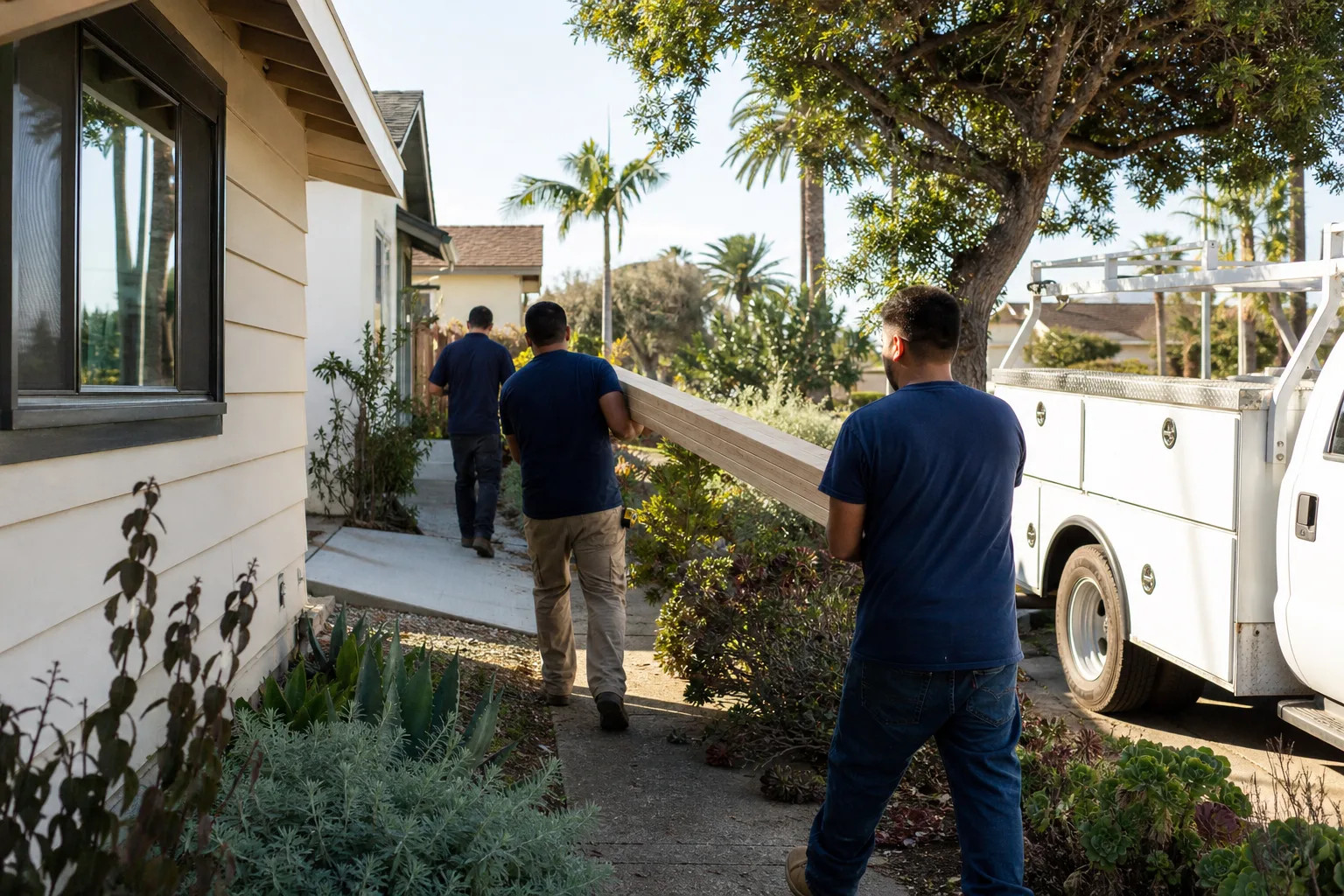
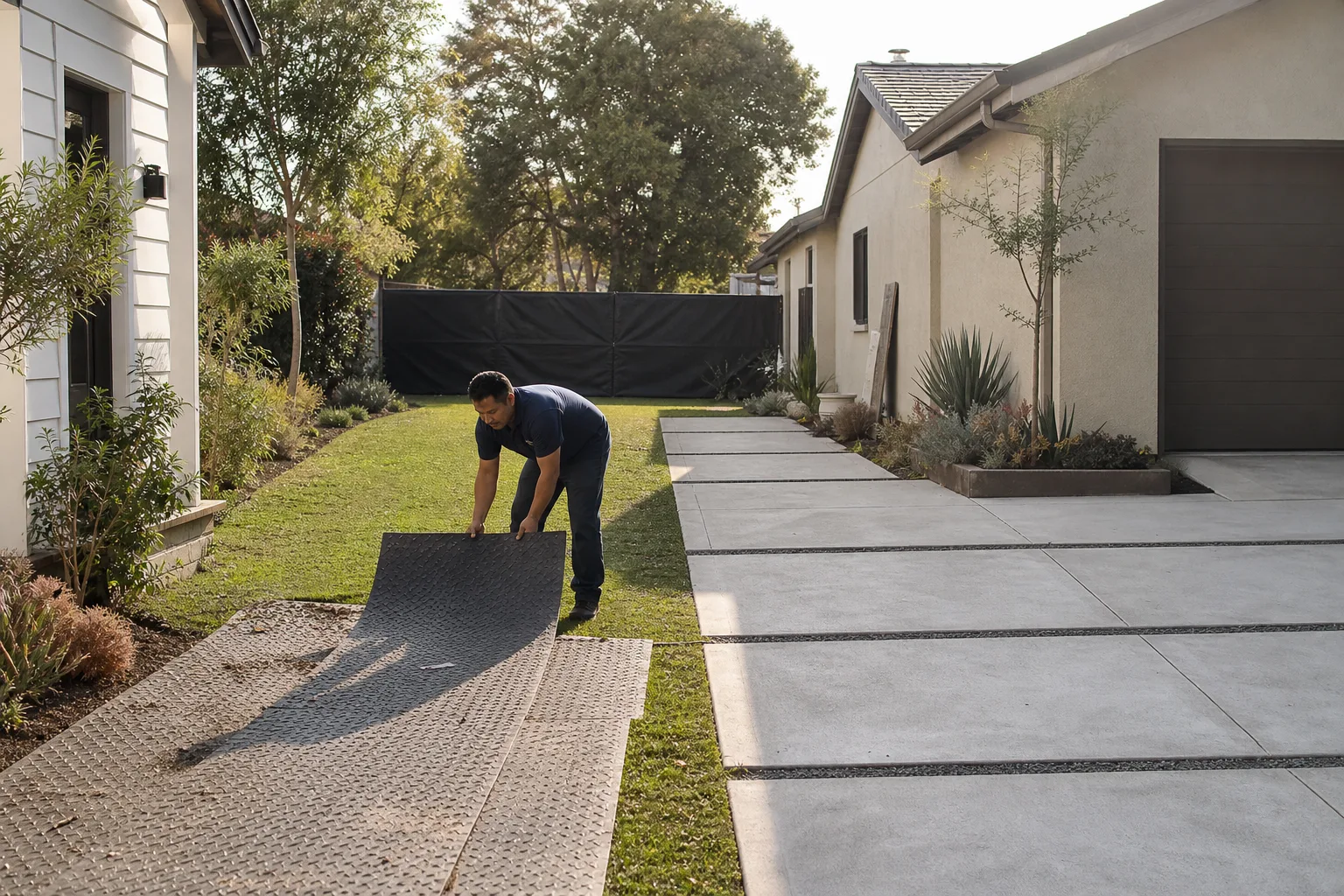
- Demolition and site prep – saves $2,000 to $4,500. Tearing out an existing patio cover, pulling old pavers, removing a non-bearing wall, and clearing the footprint for the addition. This is physical work, not technical work. Rent a dumpster, buy a pry bar and a sledge, and you’re there. The only caveat is knowing which walls are load-bearing before you swing.
- Insulation – saves $800 to $1,600 on a 400 sq ft build. Batt insulation is straightforward to install if you follow the manufacturer’s R-value chart. Spring Valley’s climate is a mixed bag – triple-digit summers and cool desert nights – so R-13 in the walls and R-38 in the ceiling are typical for a conditioned addition. Inspectors check the R-value labels, not your technique.
- Interior painting – saves $1,200 to $2,400. Two coats, primer over new drywall, and you’re done. The cost difference between painting your own addition and hiring it out is real money for a weekend of work.
- Finish trim, baseboards, and door casings – saves $600 to $1,400. Mitered corners and a nail gun. This is the last thing before paint and it’s forgiving if you’re careful.
- Flooring – saves $1,000 to $2,500. Luxury vinyl plank or laminate floats over a clean subfloor with no adhesive. Tile is a different story – hire that out.
- Landscaping and final grading – saves $1,500 to $3,500. Restoring the yard after the addition is finished, including the drainage slope away from the new foundation. Clark County wants that slope at 6 inches over the first 10 feet, and they’ll check.
Add those up on a 400 sq ft project and you’re looking at somewhere between $7,000 and $16,000 you can keep in your pocket without putting your permit at risk.
Why Framing and Foundation DIY Usually Backfires
We’re not going to tell you framing is impossible to learn. Plenty of people have built sheds and garages. But a home addition that has to pass a Clark County structural inspection, support a roof, and stand up to desert soil movement is a different animal, and the math rarely works in the homeowner’s favor. Here’s the specific reason.
Foundation work on Spring Valley soil is the harder of the two. Much of the area sits on expansive clay that swells when it’s wet and shrinks when it’s dry, and the water table shifts seasonally in ways you can’t see from the surface. A footing that’s six inches off or a slab that’s improperly graded will crack within a year and require underpinning – $12,000 to $30,000 depending on the extent. Getting the geotechnical report right, sizing the footing per the engineer’s stamp, and passing the county’s pre-pour inspection is where a licensed foundation sub earns their fee.
Framing has its own quiet costs. Rough framing that’s out of plumb by a quarter inch compounds across a 20-foot span and shows up in the drywall, the trim, and the door hang. Rework on a homeowner-framed addition typically runs $6,000 to $18,000 – more than the licensed framing sub would have charged. And there’s a timeline problem that DIY framers underestimate: framing has to be paired with the rough electrical and plumbing inspection before the sheathing closes, and the sequencing between the two is what keeps the build from sitting idle for weeks.
None of this is a scare tactic. It’s just math. Framing and foundation are the two categories where the licensed pro’s fee is smaller than the cost of one mistake.
How to Legally Act as Your Own General Contractor
This is the middle path, and it’s the one that makes sense for a lot of Spring Valley homeowners. You’re not swinging a hammer for everything – you’re running the project, hiring licensed subs, and doing the safe tasks yourself. Here’s the process, in order:
- Confirm your owner-builder eligibility. You must own the property, occupy it as your primary residence, and not be developing it for sale or rent within one year, per NRS 624. Confirm the exact scope with the Nevada State Contractors Board before you file anything.
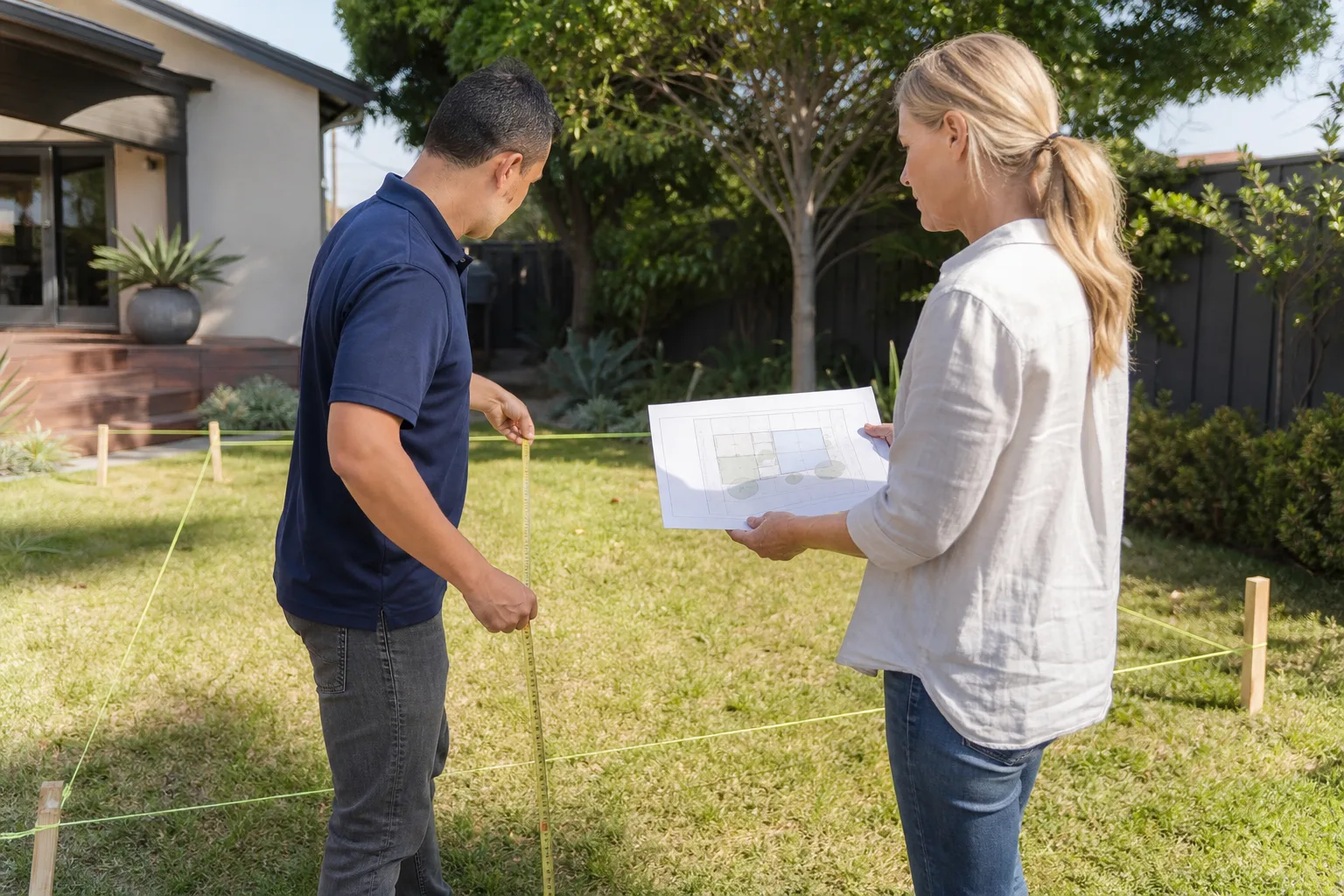
- Pull the permits in your own name. You file at Clark County’s Department of Building & Fire Prevention with drawings stamped by a Nevada-licensed architect or engineer. This is the step most homeowners underestimate – the drawings alone typically run $2,500 to $6,000 on a 400 sq ft addition.
- Hire licensed subs for every regulated scope. Electrical, plumbing, HVAC, and any structural work. Get license numbers, insurance certificates, and a written scope for each. The county will list the subs on the permit at time of inspection.
- Sequence the build. Foundation → framing → rough electrical and plumbing → rough inspection → insulation → drywall → final electrical and plumbing → final inspection → paint and trim. The rough inspections are what keep the timeline from blowing up.
- Carry the owner-builder insurance and worker’s comp gap. More on this below.
- Schedule final inspections and document everything. Photograph the rough framing, the rough electrical, and the plumbing before the walls close. If a question comes up at final, photos are your evidence.
If you want a sense of what a professionally managed version of this looks like, our guide to working with a home addition contractor in Spring Valley walks through the schedule and paperwork side. It’s a useful comparison before you commit to the owner-GC route.
The Permit Paperwork Most Homeowners Miss
Owner-builder permits in Spring Valley fail on paperwork more often than construction. The Clark County building department wants a specific set of documents, and any one of them missing can add two to three weeks to your start date.
- Stamped drawings from a Nevada-licensed architect or engineer. A hand sketch from your brother-in-law won’t get accepted.
- A site plan showing setbacks, easements, and impervious surface ratios. Spring Valley’s zoning varies by subdivision, so the lot coverage limit could be 40% or 50% depending on where you are.
- An owner-builder affidavit, notarized. This is where you declare the addition is for your own use, not for resale.
- A licensed sub list with license numbers. Every electrical, plumbing, and mechanical sub has to be named on the application.
- An energy compliance form (Nevada’s version of Title 24). It documents insulation, window U-values, and HVAC sizing.
- HOA approval if your subdivision has one. A lot of Spring Valley neighborhoods do, and the HOA review can take as long as the county.
If you’re converting a garage rather than building out, the paperwork is different – we cover the specifics in our guide to working with a garage conversion contractor in Spring Valley.
The Insurance Gap You Need to Cover
This is the section most DIY guides skip entirely, and it’s the one that keeps us up at night. When you act as your own general contractor, your homeowner’s policy is not the same as a contractor’s policy. They cover different things.
A standard homeowner’s policy typically excludes damage that occurs during a construction project the homeowner is running. Injuries to a sub’s employee on your property may not be covered unless that sub carries their own worker’s comp – ask for the certificate and keep a copy. If a sub is uninsured and gets hurt in your new addition, you could be personally on the hook for medical costs, and that can run into six figures from a single fall off a ladder.
The practical fix: require every licensed sub to provide a certificate of insurance naming you as an additional insured, and consider a builder’s risk policy or a specific rider on your homeowner’s policy for the duration of the build. On a 400 sq ft addition, the rider typically costs $400 to $1,200 and covers fire, theft of materials, and weather damage to the unfinished structure. Spring Valley’s monsoon season runs July through September, and an open-framed addition during a dust storm or a sudden downpour is exactly what the rider is there for.
Full Professional Build vs. Hybrid vs. Full DIY
Here’s the honest breakdown for a 400 sq ft addition in Spring Valley. These numbers are typical ranges for a mid-grade finish, and they don’t include the cost of land, financing, or HOA fees.
- Full professional build (turnkey): $95,000 to $135,000. Timeline 6 to 9 months. Risk: low. Written price before work begins, licensed subs throughout, single point of warranty. If the framing is off, the contractor redoes it. If the county rejects a drawing, the contractor resubmits.
- Hybrid owner-GC model: $72,000 to $108,000. Timeline 9 to 14 months. Risk: moderate. You save the 10 to 20 percent general contractor markup, but you carry the scheduling, the insurance gap, and the inspection coordination. Owner-GC builds in Spring Valley that go smoothly typically have a homeowner who’s comfortable making 30 phone calls in the first month.
- Full DIY (everything except regulated scopes): $55,000 to $85,000. Timeline 12 to 24 months. Risk: high. The savings are real on paper, but they evaporate fast when one framing error, one footing miscalculation, or one permit re-submission lands. Two-thirds of the homeowner-DIY additions we’ve been called out to correct ended up $15,000 to $30,000 over budget due to rework alone.
The full professional build is more expensive up front, and there’s no pretending otherwise. But the hybrid model only saves money when the homeowner has both the time and the temperament to run a build. If the answer to “can you make it to a 7 a.m. concrete pour on a Tuesday?” is no, the savings won’t materialize.
If prefab is on your radar, the picture changes – panelized and modular builds from manufacturers like ADU builders in Spring Valley can compress the on-site timeline, and the DIY scope shrinks to site prep and finish work. Our team is familiar with the major prefab lines, including Abodu and Cover, and can line up what’s realistic for your lot before you commit. If you’re just starting to sketch out the shape of the project, the overview at the Lodgewick ADU Builders Spring Valley home page is the right place to begin.
Common Mistakes to Avoid
- Assuming owner-builder status covers electrical and plumbing. It doesn’t in Clark County. Check the scope with the Nevada State Contractors Board before you demo anything, not at final inspection.
- Closing the walls before the rough inspection. Photograph the framing, electrical, and plumbing before drywall goes up. The inspector will want to see the work, and if the wall’s closed you’re opening it back up at your own cost.
- Skipping the geotechnical report on Spring Valley’s expansive clay. A $600 report saves a $20,000 footing repair. There’s no shortcut that works here.
- Underestimating the HOA timeline. Many Spring Valley subdivisions have architectural review committees that meet monthly. A missed meeting can push your start by 30 days.
- Running a build without builder’s risk insurance. A monsoon-season storm on an open-framed addition is the kind of thing that ends DIY projects permanently.
- Hiring the cheapest framing bid without checking the license. Framing is a structural scope in most Clark County jurisdictions. If the sub can’t pull the permit, they can’t legally sign off on the work.
- Forgetting the final grade slope. The county wants 6 inches of fall over the first 10 feet away from the addition. Skip it and your final inspection fails, and the fix means re-landscaping the perimeter.
When to Call a Professional
The line we’d draw for a Spring Valley homeowner is this: if the task has a permit signature attached to it, involves moving the structure’s load path, or requires a licensed license number to pass inspection, a professional does the work. That covers foundation, framing, electrical, plumbing, HVAC, and anything structural. It also covers the whole build if the schedule is tight and the homeowner can’t be on site for inspections.
Lodgewick ADU Builders Spring Valley offers free estimates in Spring Valley – call (844) 780-4284 and a live person answers, day or night. Every estimate comes with a written price before any work starts, and every project is backed by the 365-Day Done Right Promise: if a piece of the build isn’t right, we come back and make it right, and that language is in writing before the first nail goes in. If you’re weighing DIY against a hybrid model, the estimate is the right place to start the comparison.
Frequently Asked Questions
Yes, if you qualify as an owner-builder under NRS 624 – meaning you own the property, occupy it as your primary residence, and aren’t building for resale. You’ll file at Clark County’s Department of Building & Fire Prevention with stamped drawings and an owner-builder affidavit. The permit is issued in your name, not a contractor’s. Call (844) 780-4284 if you want to talk through what your specific lot will need before you file.
No. Clark County requires a licensed electrical contractor for any new wiring, panel work, or fixture installation on an addition, regardless of owner-builder status. The permit will list the licensed sub’s name, and the final inspection won’t pass without it. If you’ve already run wires yourself, an electrician can re-pull them so the work is legally theirs, but expect to pay for the rework.
On a 400 sq ft addition, the realistic savings from doing safe tasks yourself – demolition, insulation, paint, trim, flooring, landscaping – land between $7,000 and $16,000. Acting as your own general contractor on top of that saves the 10 to 20 percent markup on sub contracts, which is another $8,000 to $20,000 on a project this size. Anything more than that means you’re doing structural or regulated work, and the savings usually don’t survive the first rework.
The two we see most are expansive clay under the foundation and monsoon-season water intrusion into an open-framed structure. Both are hard to spot until they’ve done damage. A geotechnical report before you pour and a builder’s risk policy during the build prevent most of it. If either cost is out of reach, the hybrid model or a professional build is a safer bet.
You can hire subs yourself as your own general contractor, as long as you carry the insurance, coordinate the schedule, and pull the owner-builder permit. That route saves the GC markup but requires you to be available for inspections, handle the paperwork, and manage the sequencing between rough trades. Some homeowners are great at it. Many aren’t, and it’s better to know which camp you’re in before you start.
The DIY scope is smaller on prefab – site prep, foundation, utility hookups, and finish work are the main homeowner-facing pieces. Panelized builds from manufacturers like Abodu or Cover can compress the on-site timeline significantly. But the foundation and utility connections still need licensed subs, and the delivery-day logistics are more demanding than a site-built addition, not less. Call (844) 780-4284 if you want to compare the logistics before you commit.
The Bottom Line
DIY is legally fine in Spring Valley for demolition, insulation, paint, trim, flooring, and landscaping – and it saves real money, somewhere between $7,000 and $16,000 on a 400 sq ft addition. DIY isn’t fine for electrical, plumbing, HVAC, or anything with a structural load path. Owner-GC builds work if you can carry the insurance gap, the paperwork, and the scheduling. Full professional builds cost more up front and save the rework, which on Spring Valley’s clay soil and monsoon season is not a small thing. Know which camp each task belongs to before you swing the hammer.
Lodgewick ADU Builders Spring Valley offers free estimates, a written price before any work starts, and The Kingswell Guarantee on every project. Call (844) 780-4284 for a real number on your addition and a straight answer about what’s worth DIYing and what isn’t.
Written by the team at Lodgewick ADU Builders Spring Valley.