Last updated November 18, 2026
Home Addition Contractor Warning Signs Every Homeowner Should Know
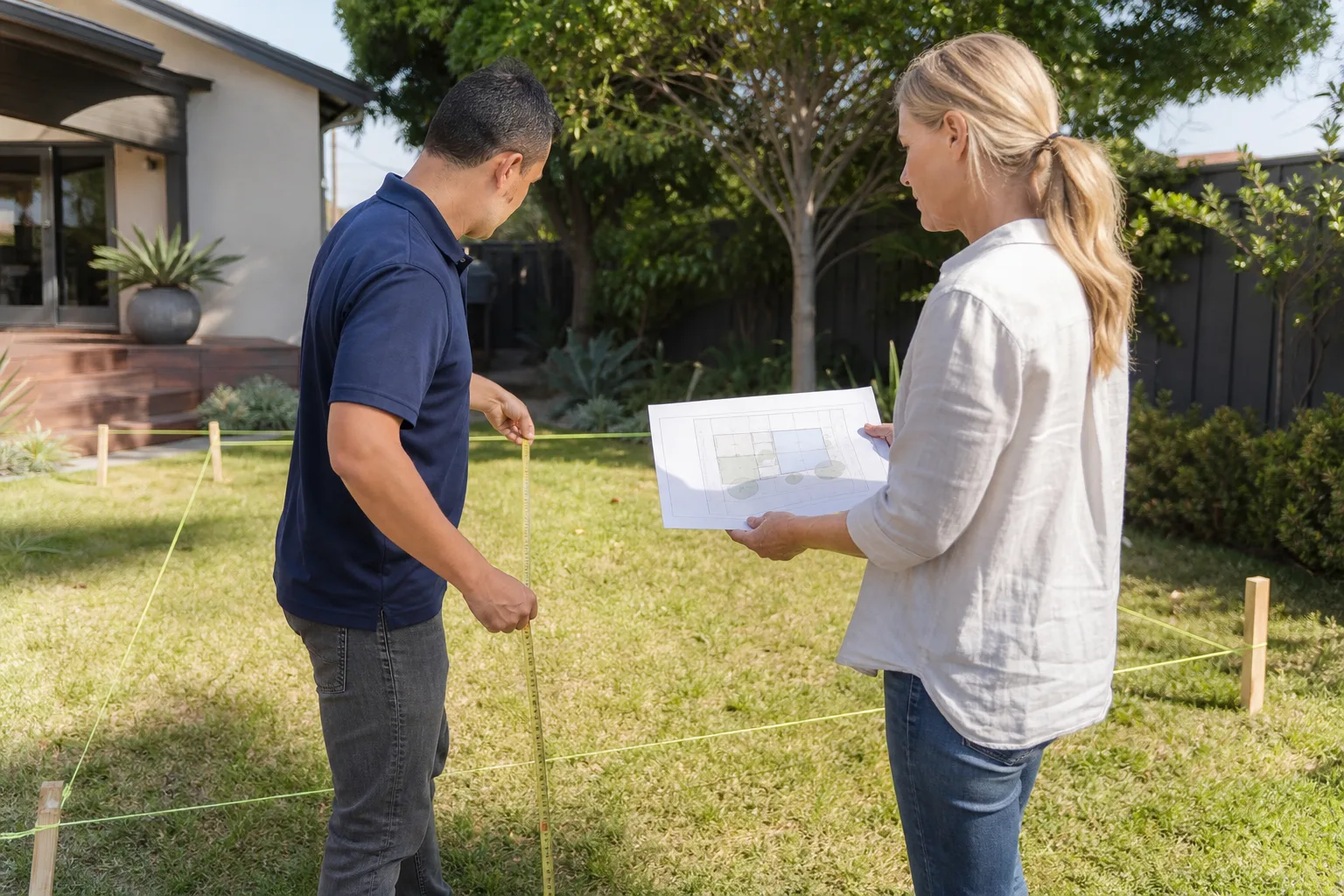
The single most reliable predictor of a problem contractor isn’t their reviews. It’s whether they hesitate when you ask for the written price before the design is finalized. That hesitation has a reason: a fixed number in writing removes their ability to change-order you into a higher price after you’ve committed emotionally, financially, and logistically to a build. We’ve sat across from homeowners in Spring Valley who heard that hesitation and ignored it, and we’ve met the ones who caught it early. This guide translates the exact phrases, contract structures, and job-site behaviors that look normal to a first-time builder but are warnings to anyone who’s seen the pattern.
Quick Answer
The warning signs of a bad home addition contractor fall into four categories: verbal hedges that signal coming change orders, bids priced below the true scope, license and insurance documents that don’t hold up to verification, and contract clauses that protect the contractor rather than you. The clearest early signal is a refusal to give a written price before design is complete. In Spring Valley, where lot sizes and HOA rules vary block by block, a contractor who won’t put scope in writing is a contractor who plans to bill for ambiguity later.
Table of Contents
- The Five Phrases That Signal Coming Change Orders
- What a Suspiciously Low Bid Actually Costs You
- Verifying a Contractor in Nevada: NSCB Steps and Insurance Traps
- Contract Clauses That Protect the Contractor, Not You
- Job-Site Red Flags During the Build
- Scheduling Behavior That Predicts Trouble
- Spring Valley-Specific Warning Signs
The Five Phrases That Signal Coming Change Orders
Change orders are legitimate. Soil conditions change, inspections surface surprises, and a homeowner who adds a bathroom mid-build should pay for it. The problem is a contractor who builds their margin into planned changes. These five phrases, said before the contract is signed, are the tells:
- “We’ll figure out the details as we go.” Details that aren’t priced become prices you can’t refuse later, once framing is up and you’re two months in.
- “That number is just a ballpark – nobody can price this exactly.” A professional gives a fixed price with a written scope of what’s included. A ballpark, in practice, is a floor.
- “Don’t worry about permits, we’ve got a guy.” Unpermitted addition work in Clark County surfaces at resale, at insurance claims, and at the next inspection. The savings evaporate.
- “The price includes everything you need.” “Everything you need” is the most dangerous phrase in construction. It has no definition. Ask for a line-item list of exclusions in writing.
- “If we go over, we’ll work it out.” “Work it out” means you pay. A real written price names the change-order process, who authorizes it, and at what rate.
We’ve found that homeowners who hear any two of these in the first conversation and still sign are the same homeowners who call us two years later asking what a mechanics lien is. A written price before work starts isn’t a courtesy. It’s the thing that keeps a project from mutating into a budget you didn’t agree to.
What a Suspiciously Low Bid Actually Costs You
A bid that comes in 20-30% under the other two isn’t a bargain. It’s a scope problem. The contractor has priced a smaller job than you think you’re buying, and the difference shows up after work begins. Here’s how to reverse-engineer a low bid, line by line, to find what’s missing:
- Site prep and grading: Does the bid include excavation, haul-off, and engineering? Many low bids price “dirt work” as a separate line.
- Foundation type: Slab, stem wall, and post-and-pier all price differently. Ask which one is in the bid and why it’s right for your lot.
- Mechanical, electrical, plumbing: Are MEP costs listed, or bundled into “miscellaneous”? Bundles hide numbers.
- HOA submission: Spring Valley has a heavy concentration of HOAs along the Rhodes Ranch, Peccole Ranch, and Spanish Trail corridors. Plan-submission and architectural-review fees run into the hundreds and are almost never in a low bid.
- Inspection corrections: Who pays for re-inspection if the first one fails? If the bid is silent, you do.
- Final finishes: Paint, trim, flooring, hardware. Low bids stop at drywall and call it done.
If the gap between the low bid and the middle bid can be traced to missing lines you need, the “cheaper” contractor is actually the more expensive one once change orders land. And in Spring Valley’s summer heat, a low bid often also omits the radiant barrier or upgraded insulation that keeps a new addition from becoming an oven by June.
Verifying a Contractor in Nevada: NSCB Steps and Insurance Traps
Nevada licenses contractors through the Nevada State Contractors Board, and the verification takes minutes. There are three checks, and they matter in order:
- License status. Go to the NSCB website and search the license number. “Active” means they can legally contract. “Inactive,” “suspended,” or “expired” means they cannot. Not “probably can’t.” Cannot.
- Classification. A residential license (Class B or C) covers most home additions. A license classified for commercial work or a different trade does not cover your addition, even if the contractor insists it does.
- Bond and insurance. The NSCB shows the bond amount on file. A certificate of insurance from the contractor’s carrier is the start, not the end.
This is where most homeowners stop and get burned. A certificate of insurance proves the contractor carries coverage. It does not prove you are covered. Ask to be named additionally insured on the general liability policy before any work starts, and ask the carrier to send you the endorsement directly. Subcontractors need the same check. If a subcontractor’s uninsured crew member is injured on your property, the claim can reach your homeowner’s policy. A contractor who resists being asked for this paperwork is a contractor who doesn’t have it.
For the full picture of how a properly structured Spring Valley addition is scoped and permitted, see our Home Addition Contractor in Spring Valley page.
Contract Clauses That Protect the Contractor, Not You
The contract is where warning signs become binding. Three clauses deserve a hard look before you sign:
Vague completion language. A contract that says “work shall be completed in a timely manner” has no completion date. A real contract names a substantial-completion date and defines what “substantial” means. Without that, your contractor can stretch a nine-week build to a year.
Unilateral change-order authority. The clause usually reads something like: “Contractor may make changes necessary to complete the work, added to the contract price.” That gives the contractor the right to raise your price without your signature. Insist on written homeowner authorization for every change order above a stated dollar threshold.
Dispute clauses that waive the Contractors Board. Some contracts require binding arbitration or waive your right to file a complaint with the NSCB. Nevada’s Contractors Board exists to handle disputes between homeowners and licensees. Signing away that path leaves you with a private legal fight and no regulator in the room.
Every project we take on operates under The Kingswell Guarantee: a written price before work starts, a defined arrival window, a clean job site, and a written guarantee on every job. Those four items aren’t a marketing slogan. They’re the counter to every clause above. Ask any contractor for those four items in writing, and watch what happens to the conversation.
Job-Site Red Flags During the Build
By the time work starts, you’ve signed. But the build itself is where a marginal contractor becomes an expensive one, and the signs show up fast:
- Crew turns over weekly. A legitimate crew has a consistent roster. New faces every Monday suggest overextension – the contractor is juggling too many jobs and subbing your project to whoever’s free.
- Your job is subbed without disclosure. Subcontracting is normal. Silent subcontracting to an unverified crew isn’t. Ask before the contract is signed who will actually be on site.
- Progress photos don’t match the schedule. If week three looks like week one and the contractor’s update says “on track,” demand a walk-through. Photos are easy; a verified walk-through is not.
- No permit posted. In Clark County, an active permit is posted or visible in the county records. If it’s neither, work may be proceeding on a demo or remodel permit that doesn’t cover an addition.
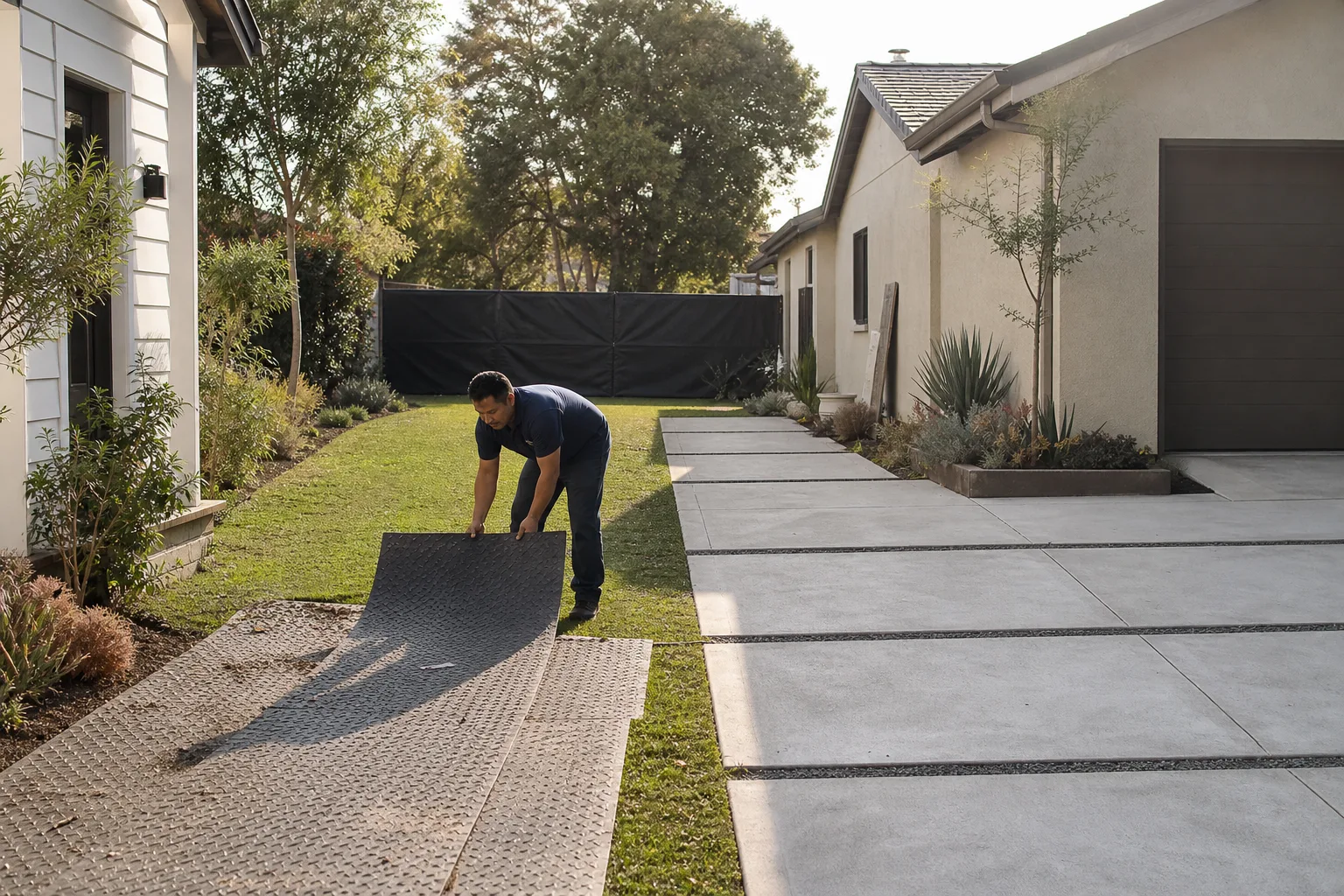
- Mess as a habit. A clean job site correlates with careful work. Debris in your yard every week, nails in the drive, material stacked without protection from Spring Valley’s afternoon wind – that’s a contractor who doesn’t run a tightened operation.
- Crew being pushed on too many jobs. If your contractor’s lead carpenter mentions three other active projects in the same week, your schedule is being traded against theirs.
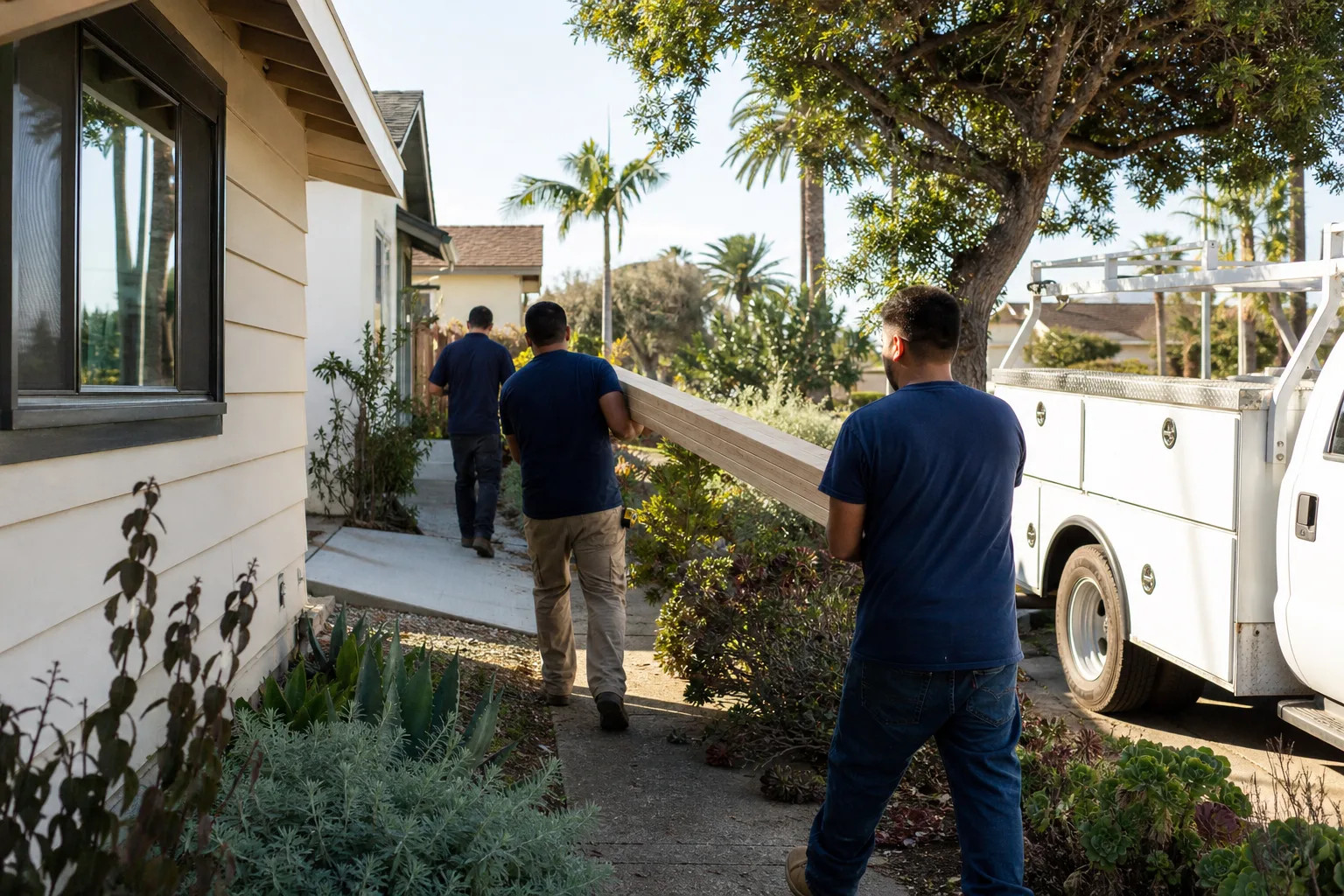
Background-checked, uniformed technicians on every job site is part of how we run a build, so a homeowner always knows who is on their property. Ask any contractor for the same. A name, a photo, and a check against a real crew list.
Scheduling Behavior That Predicts Trouble
Some contractors are terrible at communication and outstanding at building. Plenty are the reverse. But scheduling behavior is a leading indicator. Here’s what to watch:
- They won’t commit to an arrival window. “We’ll get there when we get there” is not a schedule. A defined arrival window, in writing, on the appointment confirmation, is.
- They miss the first walkthrough and blame traffic. Spring Valley traffic along the 215 beltway is real. A professional builds it into the window and calls if they’re running late.
- They go quiet for days at a time during the design phase. If the pre-construction phase is already full of dropped calls, expect the build phase to be worse. The diligence phase is the easiest one.
- They answer every call with a voicemail loop. Mid-build questions don’t wait for business hours. A live person answering the phone, 24/7, matters more during an active project than at any other time.
Our crews show up in the window we give, and calls are answered by a live person around the clock because a build question doesn’t respect a nine-to-five. Those two things prevent more disputes than any contract clause. When contractors in Spring Valley commit to both in writing, the relationship usually goes the distance.
Spring Valley-Specific Warning Signs
A few red flags are localized. In Spring Valley, watch for these:
- No HOA literacy. A contractor who doesn’t know the ARC submission process for the community you live in is a contractor who will hand the paperwork back to you. Most additions in the community cross an HOA boundary somewhere.
- No familiarity with Clark County permitting timelines. Residential addition permits move at a specific pace here, and a contractor who quotes a timeline based on another state’s process is guessing.
- No heat-load awareness. A contractor who doesn’t ask about attic ventilation, radiant barriers, or window SHGC ratings hasn’t built an addition in Spring Valley’s summer. Ask what they specify and why.
- No wind-load awareness. Spring Valley gets high-wind events. Roof tie-downs and shear-wall details should be in the plan, not improvised on site.
- No familiarity with garage conversion and ADU rules. If the addition is actually a garage conversion or an accessory dwelling unit – an ADU is a secondary home on the same lot, and a JADU is a junior version attached to the primary house – the contractor needs to know Clark County’s rules cold. See our Garage Conversion Contractor in Spring Valley page for how that specific scope gets built.
- They can’t reach established ADU manufacturers. Prefab options from Dvele, Mighty Buildings, Boxabl, and Plant Prefab are legitimate tools on the right lot. A contractor who can’t tell you which of those fits your lot, and why, hasn’t done the homework.
For the specific scope of adding living space as a secondary unit, our ADU Builders in Spring Valley page covers site fit, permitting, and what a proper ADU project looks like from first conversation to final inspection.
Common Mistakes to Avoid
- Letting one contractor price the job. Three bids, minimum. The low number rarely tells the truth, and the middle number is the one most often correct.
- Signing a contract before the scope is line-itemed. “Everything included” isn’t scope. Every room, every fixture, every finish, every exclusion – in writing.
- Skipping the NSCB lookup. It takes four minutes. The license status on the NSCB site is the truth, and the contractor’s word about it is not.
- Accepting a certificate of insurance as the finish line. You want to be named additionally insured on the general liability policy, and you want the endorsement from the carrier, not the contractor.
- Paying a large deposit up front. A deposit in the 10-20% range is normal. A 50% deposit before any work has started is a financing problem the homeowner now owns.
- Ignoring the HOA clock in Spring Valley. HOA review runs longer than people expect, and a contractor who quotes a start date without accounting for it is a contractor who will push that date later and charge you for the gap.
- Taking a verbal reassurance over a written guarantee. If the contractor is willing to say “we’ll make it right if something fails,” they should be willing to put that in writing, on paper, before work starts. Ours is the 365-Day Done Right Promise, in writing, on every job.
When to Call a Professional
Some of these warning signs are worth a conversation. Several together are worth a second opinion. If a contractor’s bid came in far under the others, if the contract has vague completion language or unilateral change authority, if you can’t verify the license or the insurance, or if the phrase “don’t worry about permits” has come up at all, call before you sign anything. The cost of a second opinion is a phone call. The cost of a bad addition contractor in Spring Valley runs into the tens of thousands, plus a lien, plus a build that never quite finishes. Lodgewick ADU Builders Spring Valley offers free estimates in Spring Valley. Call (844) 780-4284 and ask for the written price, the written guarantee, and the definition of what’s included.
Frequently Asked Questions

A refusal to give a written fixed price before design is finalized is the biggest warning sign. A contractor who hesitates on the written number is a contractor who plans to change-order you into a higher price once you’re committed. Every project we take on gets a written price before work starts, no exceptions, and that’s the standard you should hold any contractor to.
Search the license number on the Nevada State Contractors Board (NSCB) website, and confirm two things: the status is “Active,” and the classification covers residential home additions. “Inactive,” “suspended,” or “expired” means the contractor cannot legally take your job. Then ask to be named additionally insured on the general liability policy and have the carrier send you the endorsement directly. Call (844) 780-4284 if you want a second set of eyes on the paperwork.
A bid 20-30% below the others is almost always a scope problem, not a discount. Site prep, foundation type, mechanical/electrical/plumbing, HOA submission fees, inspection corrections, and final finishes are the usual missing lines. Reverse-engineer the bid line by line and price what’s missing. The “cheaper” contractor is often the higher-priced one once change orders land. Call (844) 780-4284 for a written, line-item free estimate.
No. Change orders are legitimate when they cover real conditions – unexpected soil, an added bathroom, a revision you asked for. The problem is planned change orders: a contractor whose margin depends on raising the price after you’ve signed. The tell is in the contract: a proper change-order clause requires your written authorization for every change above a stated threshold, with a defined rate. If the contract gives the contractor the unilateral right to add to the price, that’s the warning sign.
Yes. A contractor who doesn’t ask about attic ventilation, radiant barriers, or window SHGC ratings hasn’t priced an addition that performs in Spring Valley’s summer. One who doesn’t address roof tie-downs and shear-wall details hasn’t priced one that holds through the high-wind events we get here. Good design should specify both. Ask what the plan calls for and why. Call (844) 780-4284 to walk through those specifics with our team.
Ask the contractor before signing who will actually be on site, whether subcontractors will be used, and whether they’re background-checked. Background-checked, uniformed technicians on every job site means you always know who is on your property. Silent subcontracting to an unverified crew is a warning sign the moment it surfaces. Our crews are background-checked and uniformed on every project, and the name on the crew list is the name on the site. Call (844) 780-4284 to schedule a free estimate.
The Bottom Line
Bad addition contractors don’t announce themselves. They use phrases, contract clauses, and scheduling behavior that look normal to a first-time builder. The tells are the hesitation on the written price, the bid that omits scope, the contract that protects the contractor’s margin instead of the homeowner’s budget, and the job site that never quite tightens up. Verify the NSCB license, get named additionally insured on the liability policy, demand written completion dates and change-order authorization, and put the guarantee on paper before work begins. Every project we take on in Spring Valley runs on the written price, the defined arrival window, the clean site, and the written 365-Day Done Right Promise because those are the four things a homeowner can check when things go sideways. None of them are magic – they’re just on paper.
Contact Lodgewick ADU Builders Spring Valley: Call (844) 780-4284 to schedule a free estimate. We’ll walk your lot, price your addition with line items, and put the written guarantee in your hands before any work starts. A live person answers the phone, day or night. Bring your questions, your other bids, and the contract you’ve been handed – we’ll go through them with you.
Written by the team at Lodgewick ADU Builders Spring Valley.