Last updated November 18, 2026
Which ADU Rules Actually Apply in Spring Valley?
Spring Valley sits in unincorporated Clark County, and that single fact reshapes an ADU project. A Las Vegas address two miles away answers to city planners; you answer to Clark County Comprehensive Planning and the county building department. Same desert, same sun, entirely different paperwork. Most online ADU guides are written for Las Vegas or for California and quietly give Spring Valley homeowners the wrong setback numbers, the wrong permit path, and cost estimates that skip Nevada utility realities. This guide walks through what actually governs an accessory dwelling unit (a second, self-contained home on your existing lot) in Spring Valley: zoning, real dollar ranges by type, NV Energy and LVVWD hookup timelines, how to read a builder’s written guarantee, and the order of design decisions that protects your budget. By the end you’ll be pricing a project, not guessing at one.
Quick Answer
In Spring Valley, an ADU is permitted through Clark County (not the City of Las Vegas), and realistic all-in costs run roughly $180,000 to $320,000 for a detached unit, $95,000 to $175,000 for a garage conversion, and $140,000 to $250,000 for an attached addition, before utility hookup fees. Timelines typically land between 8 and 14 months from first sketch to certificate of occupancy. The costliest surprises are usually utility connections and design changes made after permit, both of which you can plan around up front.
Table of Contents
- How Spring Valley Zoning Affects Your ADU
- What an ADU Costs in Spring Valley, by Type
- Utility Hookups: The Line Item Most Quotes Miss
- The Decision Sequence That Saves Money
- How to Read an ADU Builder’s Written Guarantee
- Prefab vs. Site-Built: Matching Brand to Lot
- Common Mistakes to Avoid
- Frequently Asked Questions
How Spring Valley Zoning Affects Your ADU
Spring Valley’s residential parcels are largely zoned by Clark County as single-family residential (R-1 and similar classifications), and county code governs the ADU – not Las Vegas municipal code. That distinction matters the moment you look at setbacks, height, and size. Under county rules, detached ADUs generally follow the underlying residential setbacks, which in Spring Valley commonly means roughly 5 feet from side and rear property lines and 20 feet from the front, with height limits that usually keep a detached unit at or below the primary home’s roof line. Lot coverage caps (the share of your lot that can be built on) frequently bind before square footage does.
We’ve seen this trip up homeowners on tight interior lots near Rhodes Ranch and the 215 corridor: the lot looks big until you subtract setbacks and coverage, and the ADU shrinks. Two more Spring Valley specifics:
- HOA layers on top of county code. Many Spring Valley subdivisions carry CC&Rs that restrict unit size, exterior materials, or even whether a detached ADU is allowed at all. County approval doesn’t override an HOA.
- Parking and access. A detached unit usually needs a path to the street and often a parking space. Corner lots and cul-de-sacs in Spring Valley can force a redesign of where the unit sits.
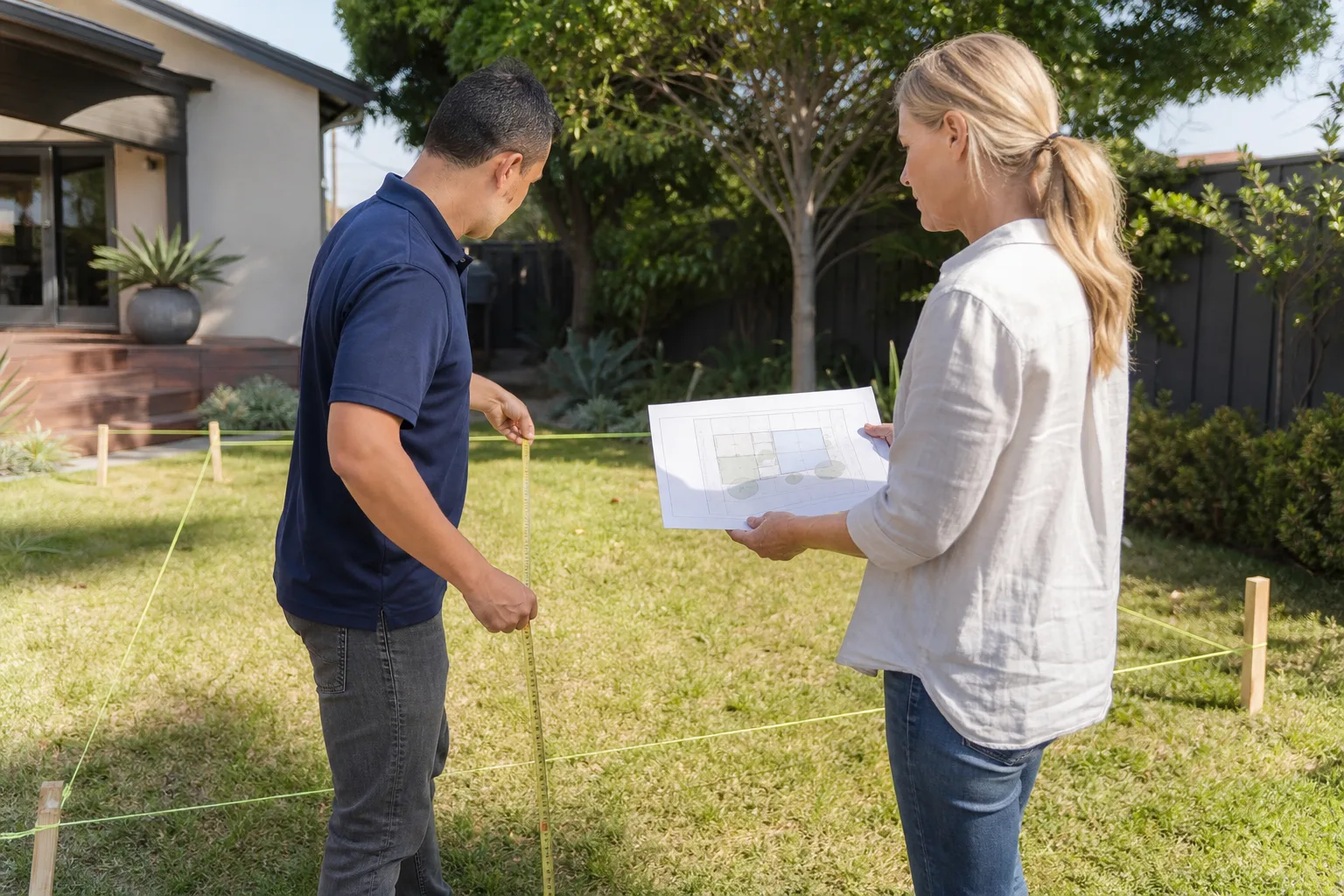
Before you draw anything, pull your parcel’s zoning and HOA documents. Our team walks Spring Valley homeowners through this at the estimate stage so the unit you design is the unit that gets approved.
What an ADU Costs in Spring Valley, by Type
Spring Valley ADU pricing depends on three things: whether you build new, convert existing space, or attach, plus site work and utility runs. Here are realistic all-in ranges we see in this market, before hookup fees and before any HOA architectural review costs:
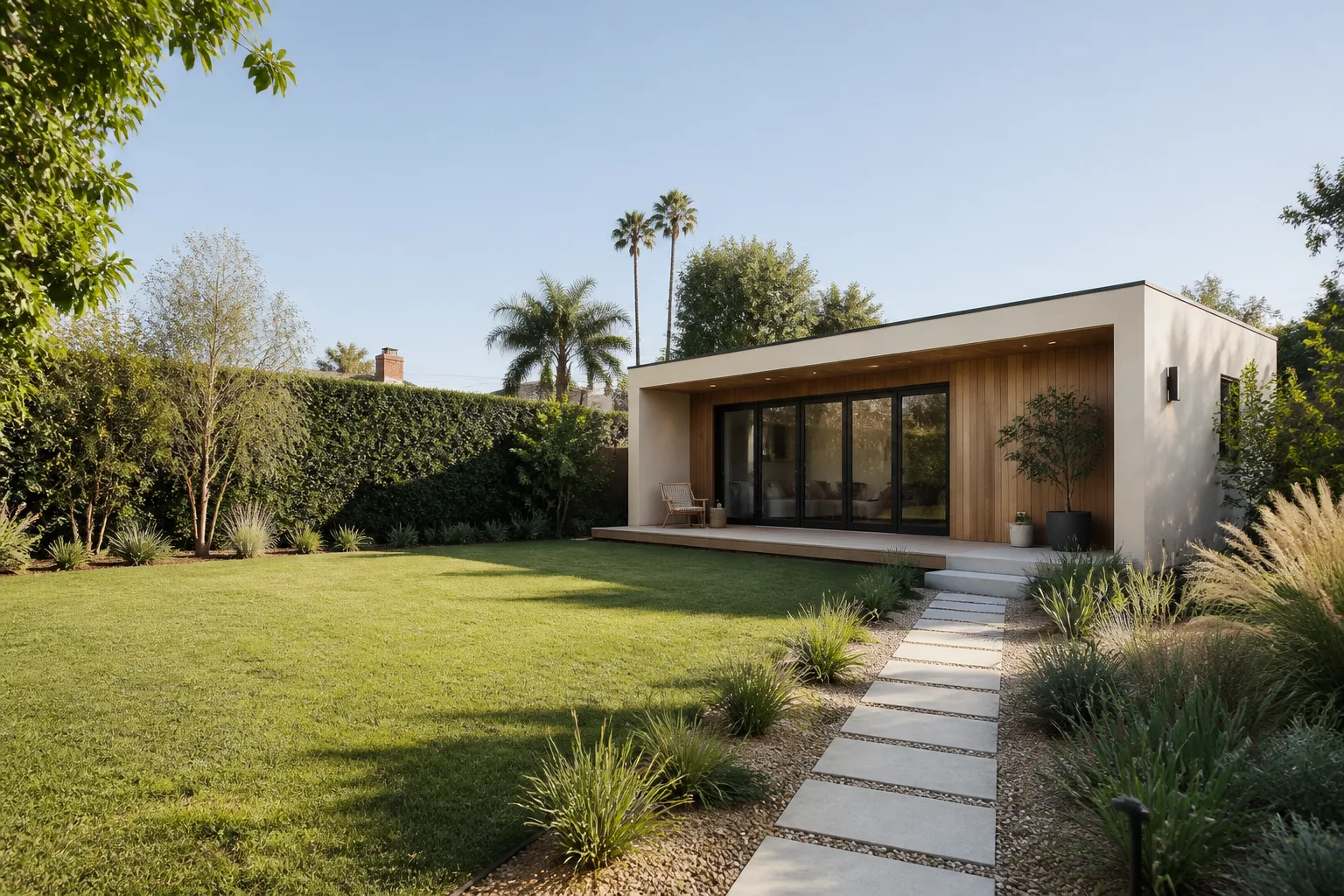
- Detached new-construction ADU: $180,000 to $320,000 for roughly 500 to 900 square feet. Foundation, framing, MEP (mechanical, electrical, plumbing), finishes, and site work included.
- Garage conversion: $95,000 to $175,000. Lower because the shell exists, higher when the garage shares a wall with the house and needs upgraded electrical service or a new slab.
- Attached addition (bump-out ADU): $140,000 to $250,000. Roof tie-ins and structural work at the shared wall drive cost.
- Utility connections: $8,000 to $30,000 depending on distance to the main and whether a new meter is required (see next section).
- Permits and plan review: typically $3,000 to $9,000 in Clark County, scaled to valuation.
The single biggest cost lever is foundation and site work in Spring Valley’s caliche-heavy soil. Caliche is a cemented calcium layer common across the valley floor; it can force over-excavation and add thousands before a single wall goes up. A builder who quotes without a soil look is quoting a number they’ll change later. We put the price in writing before work starts precisely so that surprises land in the plan, not at the door.
Utility Hookups: The Line Item Most Quotes Miss
Utility connections are where Spring Valley ADU budgets quietly blow past the estimate. Two providers control this: NV Energy for power and the Las Vegas Valley Water District (LVVWD) for water and sewer. Neither is fast, and neither fee usually appears in a builder’s base quote unless the builder has planned for it.
- NV Energy service request. A detached ADU usually needs its own meter and service drop. Plan on several weeks to a few months from application to energized service, depending on load and transformer availability. Electrical panel and service upgrades are the wildcard.
- LVVWD water and sewer tap. New units need a water service line and, where gravity allows, a sewer connection. Distance from the existing main and depth of trenching drive the cost. In parts of Spring Valley with older infrastructure, a sewer lateral upgrade is sometimes required.
- Gas (if applicable). Southwest Gas connections for a unit with gas appliances add another timeline and fee.
- Coordination. These requests should be filed alongside the building permit, not after. Filing late can add two to three months of dead time.
Ask any builder to show utility costs as separate line items in the written proposal. If they’re bundled into one number, you can’t tell what you’re paying for – and you can’t plan the timeline.
The Decision Sequence That Saves Money
Not every decision carries the same cost risk. Some lock in your budget early and are expensive to change; others you can adjust late without penalty. Getting the order right is the difference between a project that stays on budget and one that drifts. Here’s the sequence we recommend in Spring Valley:
- Lock the footprint and setbacks first. Unit size, placement, and orientation to the lot are the most expensive things to change after permit. Get these right before anything else.
- Lock the foundation and utility runs second. Site work and where the water, sewer, and power enter the unit are costly to move later.
- Lock the shell and roof line third. Structural decisions at the shared wall (attached) or roof pitch (detached) are still early enough to adjust but expensive once framing begins.
- Choose finishes late. Flooring, cabinets, fixtures, and paint are the safest to change mid-project. Adjust these to hit your budget without touching structure.
- Add the “nice to have” extras last. Covered patios, outdoor kitchens, and landscaping can be added after certificate of occupancy and don’t need to be in the original permit.
Homeowners who flip this order – picking finishes before confirming the footprint – routinely pay for changed plans and lost schedule. We’ve watched Spring Valley projects save five figures simply by holding finish decisions until the permit set is final.
How to Read an ADU Builder’s Written Guarantee
A workmanship warranty is only worth the paper it’s printed on. When you compare Spring Valley builders, read the guarantee line by line and ask what it actually covers. A real guarantee states its term, what’s included, what’s excluded, and how a return visit works.
Our own commitment is The Kingswell Guarantee, which includes the 365-Day Done Right Promise: if the work isn’t right within the first year, we come back and make it right, at no charge, and that commitment is in writing on every project before work begins. Here’s what to look for in any guarantee you’re offered:
- A stated term. “Lifetime warranty” in a brochure means nothing if the contract says 90 days. Confirm the number in writing.
- What’s covered vs. excluded. Structural, water intrusion, electrical, and finish defects should all be named. Exclusions should be equally clear.
- Manufacturer warranties coordinated. Materials like James Hardie siding carry their own warranties. A good builder passes those through to you and explains how they layer with the labor guarantee.
- A free return visit. The guarantee should say, plainly, that if something fails within the term you call and they come back at no charge.
- Written before work starts. A guarantee delivered after the fact isn’t a commitment – it’s a hope.
Ask every builder you interview for their guarantee in writing before you sign. If they can’t produce one, you have your answer.
Prefab vs. Site-Built: Matching Brand to Lot
Prebuilt and panelized ADUs have matured to the point that they’re a legitimate path for many Spring Valley lots – but not every lot. Prefab shops like Plant Prefab and Tuff Shed offer factory-built shells and modular units that arrive faster and more consistent than stick-built, at the cost of less customization and a dependency on crane access and delivery logistics. A tight Spring Valley lot with power lines over the driveway can complicate crane placement; a lot with an open side yard is a natural fit.
Site-built remains the better path when you need a custom footprint, an attached unit, or a garage conversion with structural surprises. The right choice depends on your lot, your timeline, and how much customization you want. We work with established brands including Plant Prefab and Tuff Shed, plus siding like James Hardie, and match the approach to each Spring Valley lot rather than pushing one method. If a builder only offers one way to build, ask why.
For homeowners who want to keep their main house untouched and just add space, our Garage Conversion Contractor in Spring Valley page covers the conversion path in detail. For a full detached build, see our ADU Builders in Spring Valley page.
Common Mistakes to Avoid
- Skipping the HOA check. County approval doesn’t override CC&Rs. Spring Valley subdivisions frequently restrict ADU size or exterior materials, and a project can be dead on arrival even with a permit-ready plan. Read the CC&Rs first.
- Quoting before the soil look. Caliche in Spring Valley soil can add thousands in excavation and foundation work. A builder who quotes without checking the soil is quoting a number they’ll revise.
- Treating utility hookups as an afterthought. NV Energy and LVVWD timelines run weeks to months. Filing utility requests late can stall a finished unit for a whole season.
- Choosing finishes before the footprint is locked. Finish changes are cheap; structural changes are not. Homeowners who shop cabinets before confirming setbacks pay for it twice.
- Accepting a lump-sum quote with no line items. If the proposal doesn’t break out permits, utility connections, and site work, you can’t compare builders or plan cash flow.
- Taking a guarantee verbally. A workmanship guarantee that isn’t in writing before work begins isn’t a guarantee – it’s a conversation.
- Forgetting rental-income rules. If you plan to rent the unit, confirm county and HOA rules on short-term vs. long-term rental before you build to that assumption.
When to Call a Professional
Some ADU decisions you can make on your own. Others need a licensed contractor’s eyes. Call a professional when your lot’s setbacks are tight or unclear, when your garage conversion involves moving load-bearing walls or upgrading electrical service, when you’re weighing prefab against site-built for a specific Spring Valley parcel, or when you need a written price you can actually plan around. Call before you sign a contract with no line items, and call before you accept a workmanship guarantee you haven’t seen in writing. Lodgewick ADU Builders Spring Valley offers free estimates in Spring Valley – call (844) 780-4284. Every estimate includes a written price and a written guarantee before any work starts, and a live person answers every call.
Frequently Asked Questions
Yes. An ADU in Spring Valley requires a building permit through Clark County, not the City of Las Vegas, because Spring Valley is unincorporated Clark County. Plan review and inspection are part of the process, and a reputable builder files the permit for you and coordinates utility requests at the same time.
Expect roughly $180,000 to $320,000 for a detached ADU, $95,000 to $175,000 for a garage conversion, and $140,000 to $250,000 for an attached addition, before utility hookup fees. Caliche soil, utility distances, and HOA requirements move these numbers. Call (844) 780-4284 for an exact quote – estimates are free and come with a written price.
Most Spring Valley ADU projects take 8 to 14 months from first sketch to certificate of occupancy. Utility connection timelines with NV Energy and LVVWD are usually the biggest variable, which is why we file utility requests alongside the permit. Prefab units can shorten the construction phase but still need site work and hookups.
Usually yes, subject to Clark County code and your HOA’s CC&Rs. Garage conversions are the lowest-cost ADU path because the shell already exists, but they can require electrical service upgrades and a new slab in some cases. Our garage conversion contractor page goes deeper on what to check first.
A workmanship warranty should cover labor and installation defects for a stated term, with exclusions spelled out in writing. Lodgewick’s 365-Day Done Right Promise covers workmanship for a full year, with a free return visit if the work fails within that period, included in writing on every project before work begins. Manufacturer warranties on materials like James Hardie siding layer on top.
It shouldn’t. A written price with line items for permits, utility connections, site work, and finishes should hold for the scope described. Changes you request later – like an upgraded fixture or an added patio – are the only legitimate reason a price moves. If a builder can’t show a line-item quote before work starts, that’s the signal to walk.
The Bottom Line
An ADU in Spring Valley is a real, buildable project – and the difference between a smooth one and a painful one comes down to three things. Get the county zoning and HOA right before you design, because Spring Valley answers to Clark County, not Las Vegas. Budget utility hookups as their own line item, because NV Energy and LVVWD timelines are the quiet budget killers. And insist on a written guarantee with a stated term, delivered before work begins, not after. Lock your footprint early, hold finish decisions late, and put every commitment in writing. For the next step, see our Lodgewick ADU Builders Spring Valley home page, our Home Addition Contractor in Spring Valley page, or call (844) 780-4284 for a free estimate on your Spring Valley ADU.
Written by the team at Lodgewick ADU Builders Spring Valley.